Kufeah grows... story by story
Kufeah
Palestinian Thobe
Embroidery symbols, regions, and visual memory.
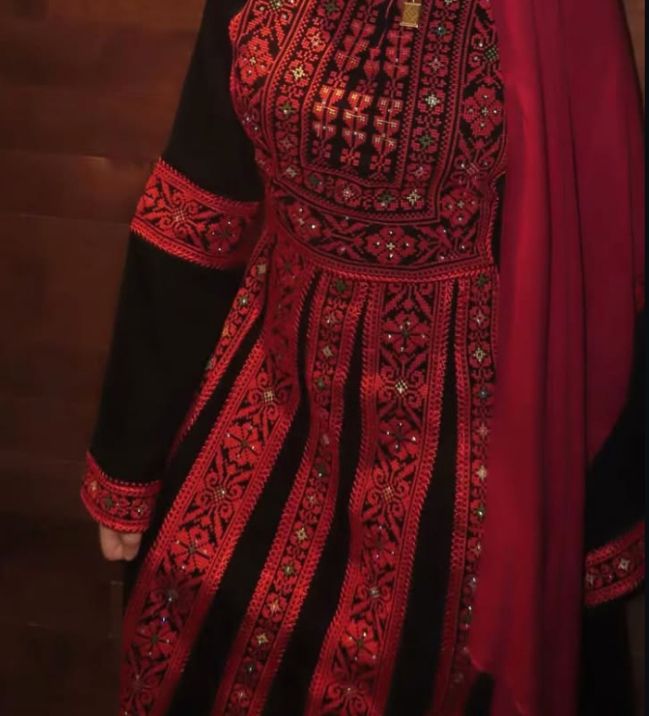
Embroidery symbols, regions, and visual memory.
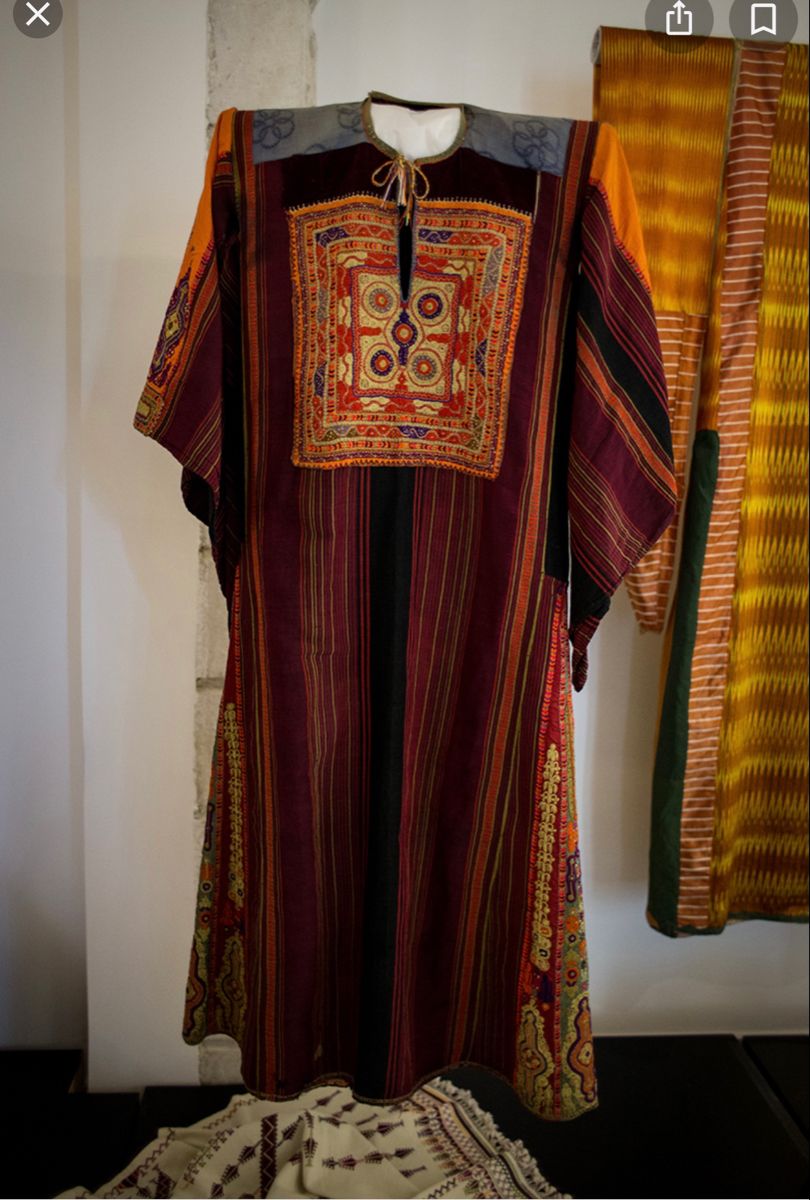
The Jerusalem thobe is one of the most famous Palestinian dresses, known for rich and intricate embroidery telling the Holy City’s story across generations.
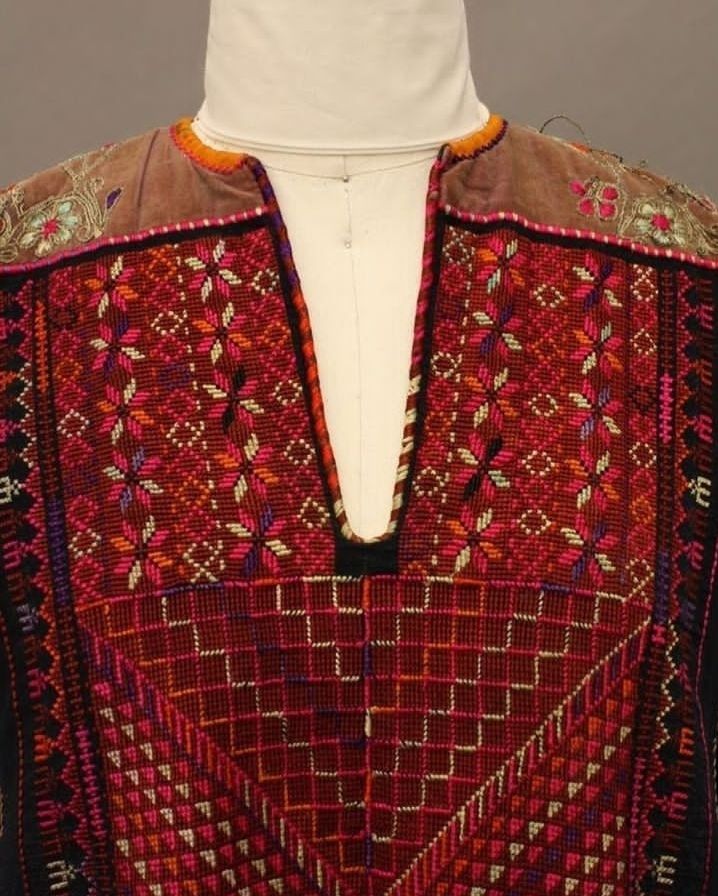
The Hebron thobe is a southern Palestinian dress known for a practical yet elegant character. Embroidery often uses strong tones (deep red/black) with repeated geometric and floral motifs across the chest panel, sleeves, and hem.
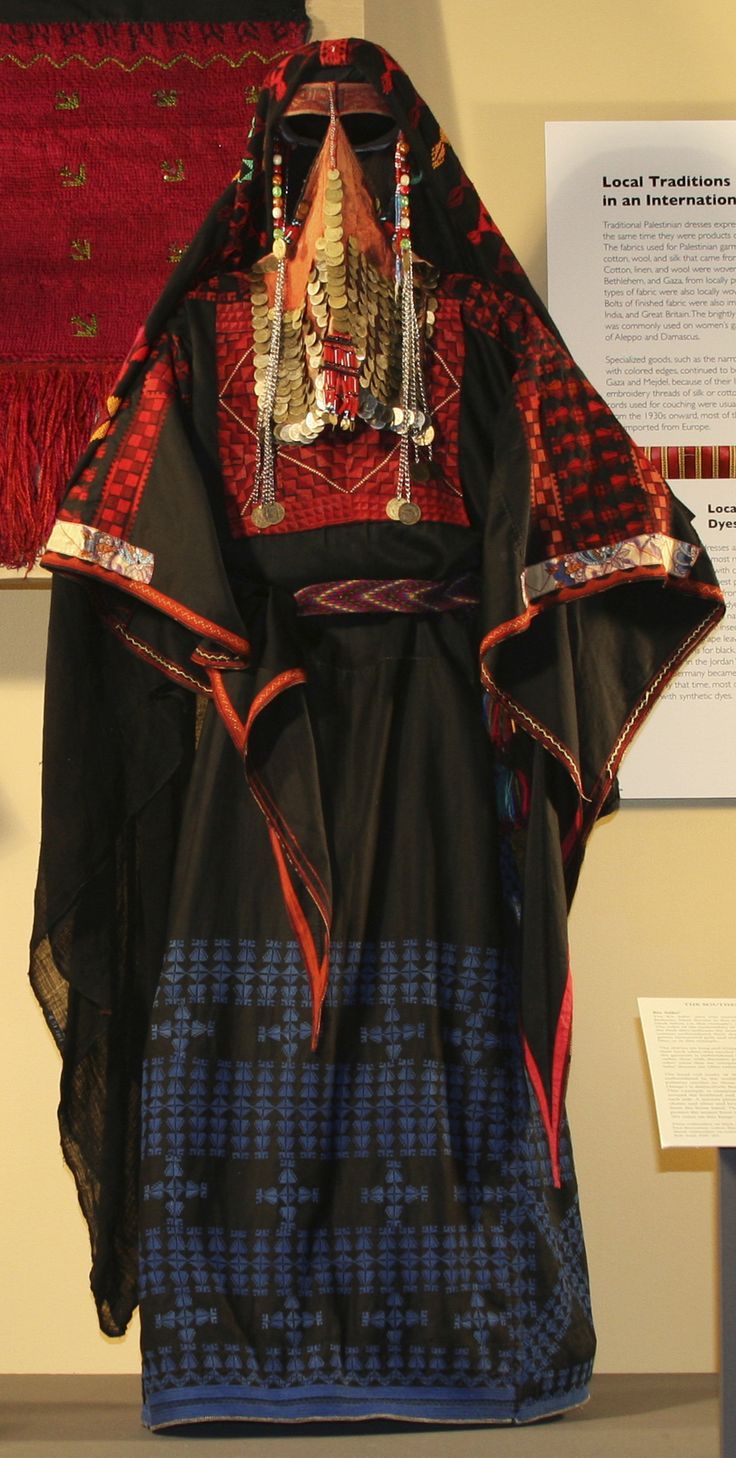
The Beer Sheba (Negev) thobe reflects the desert environment of southern Palestine. Traditionally, red could be associated with bridal wear, while blue was linked to widows. The dress is often made from heavy black cotton or linen, designed wide and loose for desert life. It is densely embroidered with silk threads using geometric motifs such as stars and triangles. It features very wide sleeves known as “mardan” and a broad embroidered hem. It is also associated with a face veil (burqa) decorated with gold and silver coins, used as both adornment and protection from the desert sun. The Beer Sheba thobe stands as a symbol of steadfastness and a documented heritage of the Negev.
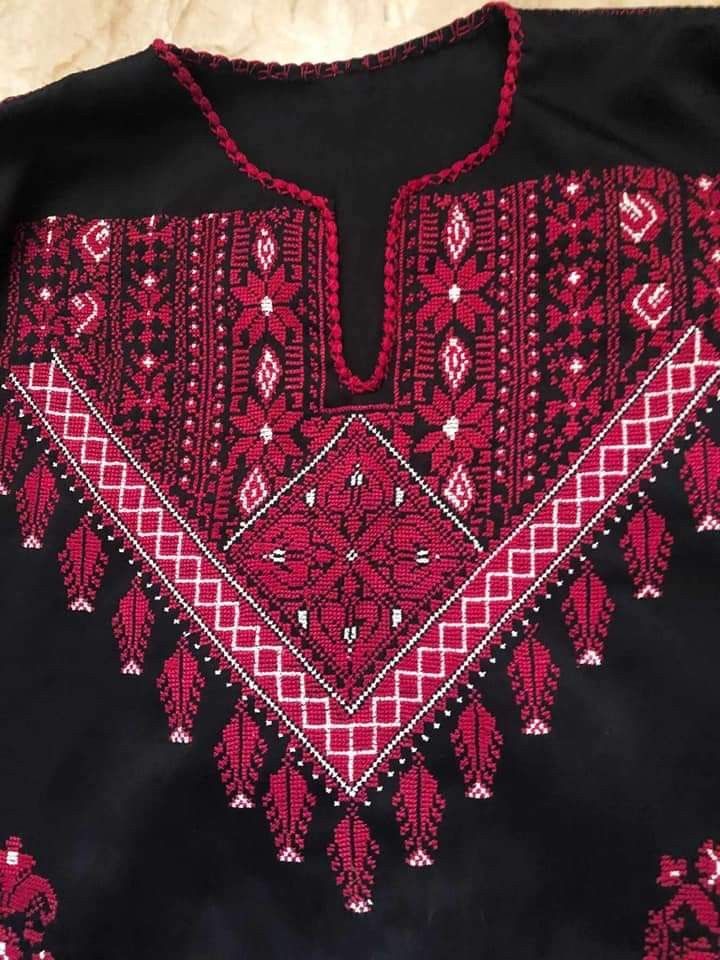
The Gaza thobe is inspired by local social life and the region’s identity. It often uses the striped “Majdalawi” fabric (green, purple, blue) with vertical lines. It is known for large-scale geometric embroidery such as eight-pointed stars and feather motifs, alongside squares and floral/bird patterns. Bright silk and cotton threads (pink, orange, yellow) are used in dense horizontal and vertical bands. The overall look is bold with strong reds, oranges, and blues, while cypress embroidery (“irq al-sarw”) symbolizes seriousness and commitment and is viewed as a key to life. A distinctive embroidered scarf called “bashniqa” is also associated with Gaza attire.
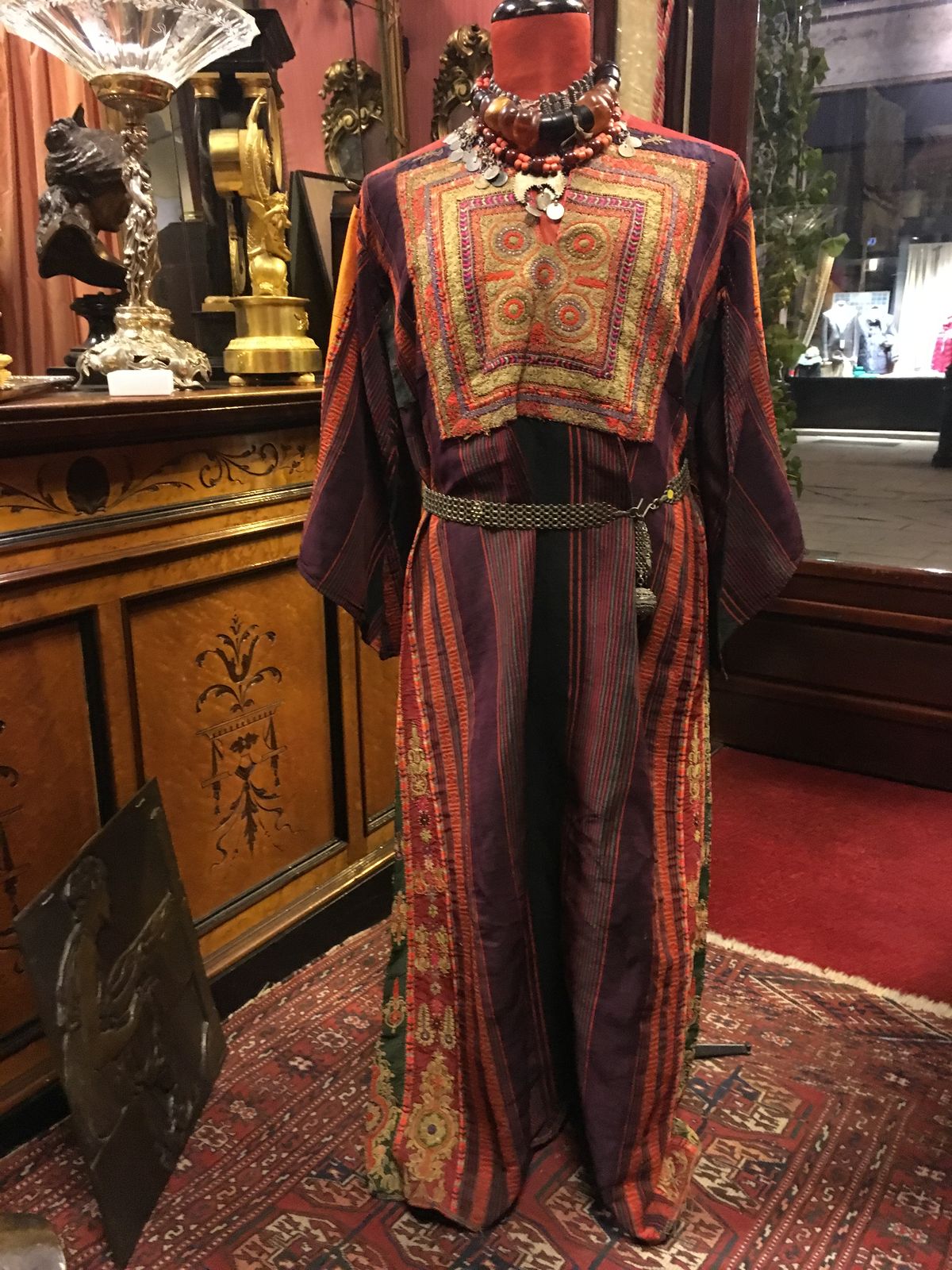
The Bethlehem thobe is one of the most luxurious Palestinian dresses, often called the “Royal Thobe” (Malak). It features striped silk fabric and dense geometric and floral embroidery using qasaba couching and silk threads (especially orange). Key elements include the “taqsira” velvet jacket and the “shatweh” headdress adorned with coins and beads. Side panels (“banayiq”) include famous units such as the “mashrabiyya” and “clock” motifs.
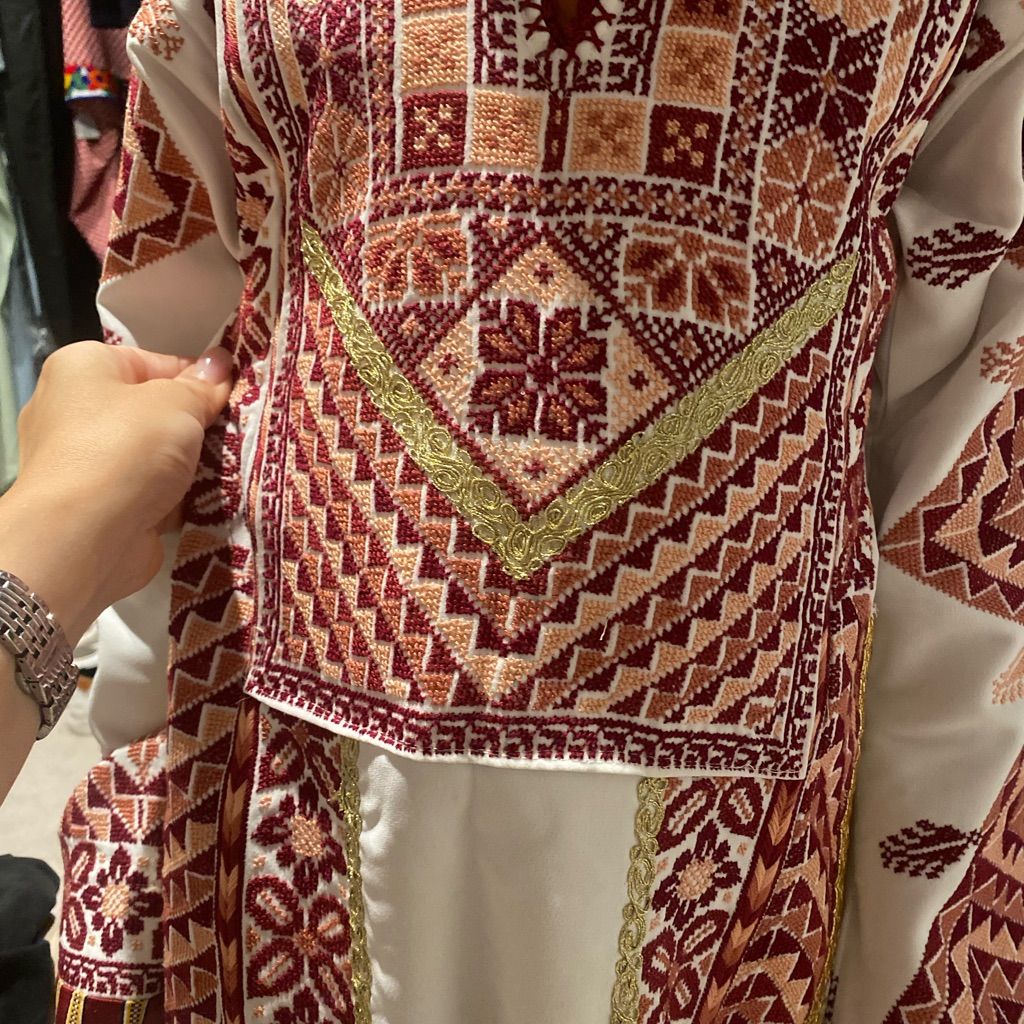
The Jaffa thobe reflects refined beauty and careful craftsmanship. It often features white or light-blue fabrics with dense, precise botanical embroidery inspired by the coastal city’s lush environment. Long vertical lines and a pronounced chest panel are common, along with floral and tree-vein-like motifs, expressing openness, beauty, and deep attachment to land and heritage.
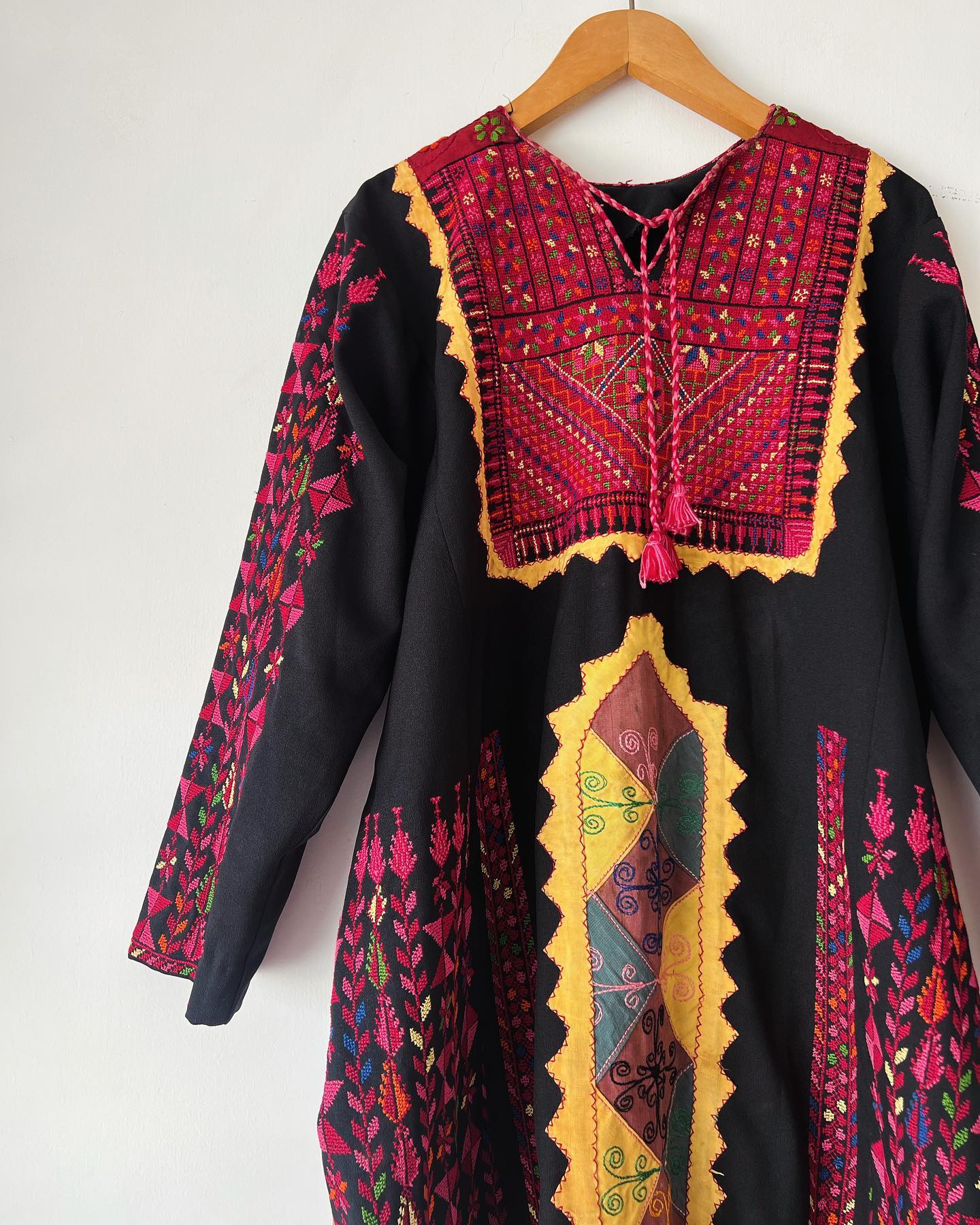
The Karmzout (also known as the Roumi) is a distinctive thobe from Lydda and Ramle. It features bright, joyful colors inspired by orange groves, embroidered using silk and cotton threads. The embroidery is dense on the shoulders, sleeves, and sides, with embroidered bands near the lower side panels. It is often paired with a matching embroidered shawl and an embroidered waist belt.