The Magic of Ramadan Nights: A Tale of Light and Soul in the Alleys of History
"A sensory immersion into the details of Ramadan in ancient quarters; from the scent of spices and sweets in the markets to the majesty of Tarawih prayers in historic mosques, depicting a portrait of solidarity that turns a neighborhood into a single home."
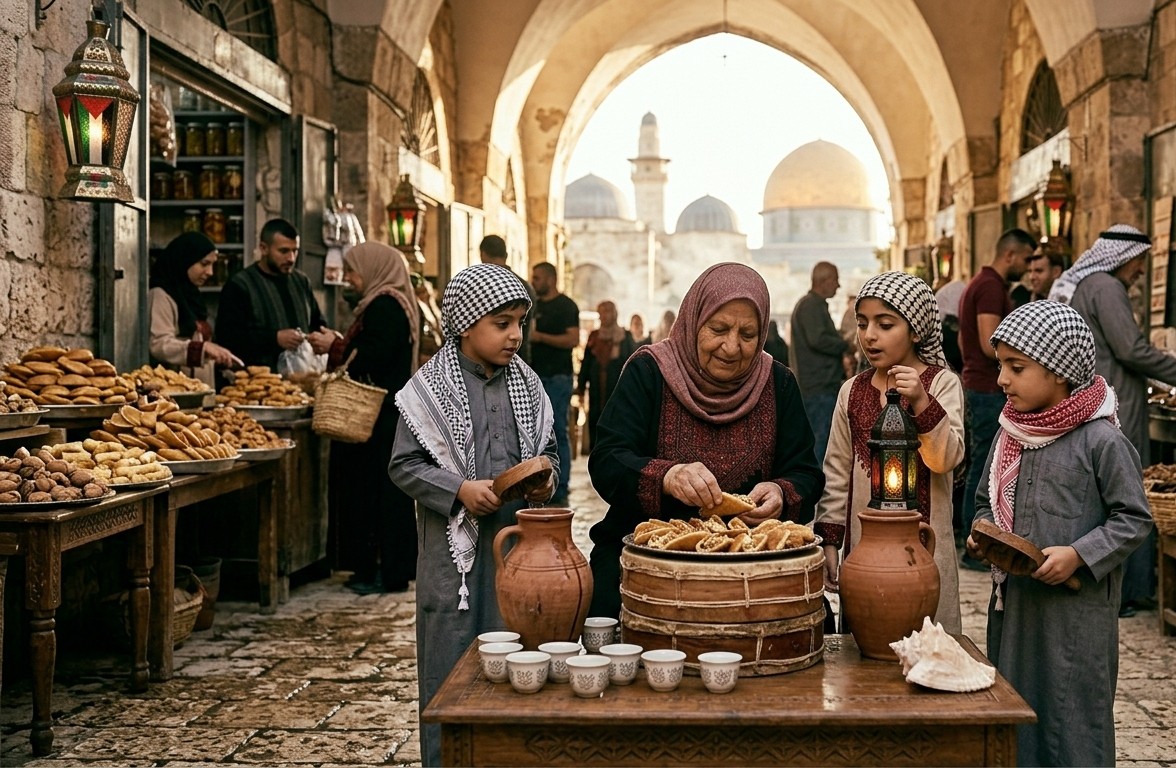
A Carnival of Senses in the "Attarin Market"
Hours before sunset, the ancient markets of Jerusalem and Nazareth transform into a vibrant theater. The clamor of merchants blends with a visual feast of colors: golden piles of Qatayef, and jars of cold Carob and Licorice juice glistening under the sunlight filtering through the market’s arched roofs. Here, the expatriate and the visitor alike experience a unique sensation where the scent of "fresh bread" mingles with the fragrance of history, forging a mental presence that binds the human soul to its land and roots. *Qatayef: The most famous Ramadan dessert; dough circles stuffed with walnuts or cheese, fried to adorn the Iftar tables, and considered an integral part of the Ramadan kitchen's visual identity.
The Collective Flow: A Flood of Hearts Toward the Mihrab
With the Maghrib call to prayer, a solemn silence prevails followed by the clink of spoons, but the true magic begins with the Isha call. This marks the "Collective Flow," where crowds pour from every alley toward the Al-Aqsa Mosque or the White Mosque in Nazareth. Walking shoulder to shoulder, young and old, they create a scene that reflects unity of state and spiritual sovereignty over the place—a sight that grants the expatriate a renewed energy of resilience and certainty. *Tarawih Prayers: Congregational prayers performed on Ramadan nights after the Isha prayer. In ancient cities, they serve as a major social and spiritual manifestation, gathering thousands in one place.
A Dialogue of Wisdom: "The Lantern is Not Just for Decoration"
Grandmother Laila pointed toward the colorful lanterns (Fanoos) lighting the neighborhood entrance and said: "My daughters, the lantern in our neighborhood isn't just a decorative light; it’s a message saying that hearts are still full of hope and homes are still open to all." She continued, watching the lights reflect on her granddaughters' faces: "This light is what dispels the darkness of circumstances; it is what helps the absent find their way back home, even from the ends of the earth."
Solidarity: "The Neighbor’s Dish" and the Sovereignty of Giving
Ramadan is incomplete without the ritual of Sakbeh. Dishes emerge from houses before Iftar to circulate through the neighborhood, ensuring every home tastes the cooking of its neighbor. This tradition embodies the highest meanings of social solidarity, turning the old quarter into one extended "Mercy Table." It creates a warm environment that offers the foreigner a sense of intimacy and the expatriate a surge of nostalgia. *Sakbeh: A folk tradition where neighbors exchange dishes of food before the Maghrib prayer to strengthen bonds and affection within the neighborhood.
Conclusion: A Night That Never Sleeps
In the ancient quarters, Ramadan is a night that never sleeps; it is a blend of worshippers' supplications, the laughter of children with their lanterns, and grandmothers' stories told by moonlight. It is a unique spiritual state that makes Jerusalem and Nazareth beacons of beauty—a destination for souls yearning for "authenticity" in an age of noise. As Grandmother Laila always says while bidding farewell to a Ramadan night: "Ramadan in our alleys is a blessing and grace; it gathers the near, brings back the displaced, and ensures that joy in our hearts leaves no trace of its absence."