The Guardians of the Vineyards: Tales of Nectar and Sovereignty
"Every year, as the grape clusters ripen into golden chandeliers, the rituals of 'cooking' begin—transforming the sweetness of summer into a reserve that withstands the winters of exile and need."
Introduction: Beneath the Shade of the Vines
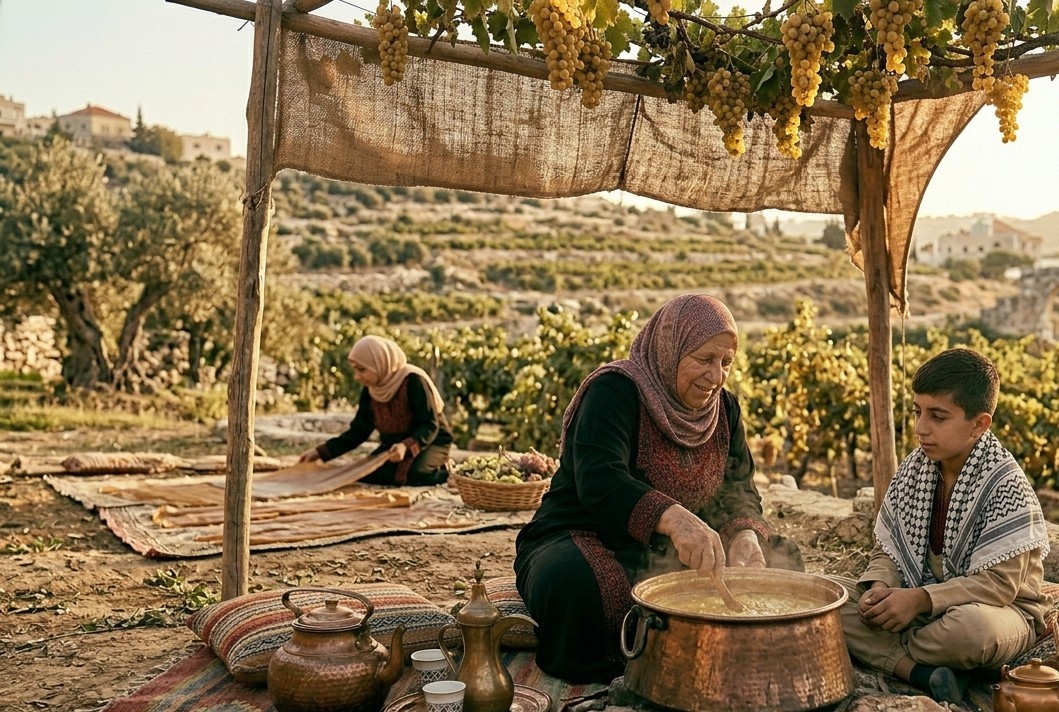
In the heart of the vineyards, where the clusters hang like chandeliers of light, the scent of the Qidreh—those large copper pots where grape juice boils for hours—wafted through the air beneath the shade of heavy vines. Grandmother Laila watched the fire with dignity, while young Hazem helped stir the golden liquid, realizing that this scene was not merely cooking, but a ritual to summon the blessing of the land.
A Dialogue of Wisdom: The Patience of the Vine and the Honor of the Farmer
Grandmother Laila turned toward Hazem and said, wiping the sweat from her brow: "My son, the grapes in our land learn patience from the farmer. See how the vine reaches its hand toward the sky? It asks for so little and gives so much. We cook Dibis (grape molasses) to hide the sweetness of summer for the chill of winter, because those who sow know they shall not die of hunger, and those who possess a vineyard, possess their honor." She continued, pointing to the Malban—the dried grape leather spread carefully to dry under the sun: "My son, this Malban is not just a treat; it is the traveler's provision and the winter’s reserve. The woman who knows how to preserve the bounty of her land is the one who preserves the prestige of her home."
The Role of the Woman: The Guardian of the Vineyards
The Palestinian woman manifests during the grape season as a creator, transforming fruits into "provisions" (Mouna) that stand the test of time. She masters the secret of Khabisah (grape pudding) and sorts the clusters to craft the raisins that adorn winter tables. She is the guardian who realizes that turning grapes into molasses is a sovereign act, ensuring the household’s self-sufficiency and independence from need.
Conclusion: The Jar of Resilience
Hazem realized that Dibis is the condensation of love and resilience in a single jar—a message sent by the land to its children in exile, telling them that the sweetness of the covenant never evaporates. As the sun dipped toward the horizon, the jars stood in rows like soldiers guarding the house, as if the earth itself had decided not to sleep until it was sure its children’s winter would be warm. As Grandmother Laila always whispered, summarizing the philosophy of generosity and roots: "The grapes are in their clusters, and the goodness is in its noble people."