The Khubeizeh Season: The Earth’s Green Gold and the Hands of the Inheritors
"A spontaneous season that gathers the village women in the fields and valleys, where Khubeizeh leaves are gathered as a symbol of the bounty bestowed by the earth, and a lesson in resilience and self-sufficiency."
Plains Laughing in Green
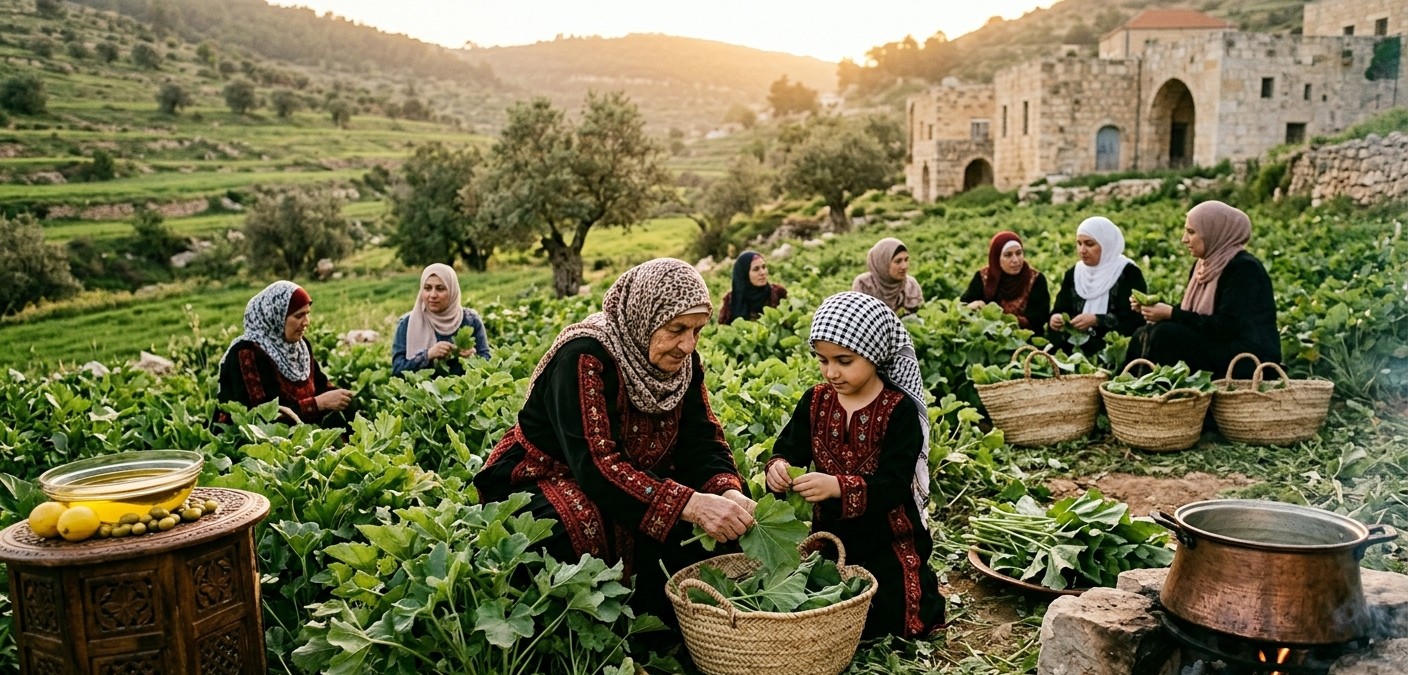
With the first breezes of spring, Grandmother Laila and her companions head toward the plains surrounding the village, where the earth is blanketed with a carpet of broad Khubeizeh leaves. The granddaughters race amongst the women, while the grandmothers bend with dignity to gather the fresh leaves and place them in wicker baskets. The sound of laughter mingles with the whisper of the wind, and the fields are filled with the scent of dew kneaded into the pure soil of the land. *Khubeizeh: A wild plant (Mallow) that grows abundantly in Palestine during the winter and spring seasons. It is considered one of the most important traditional dishes that rely on "foraging" directly from the land.
A Dialogue of Wisdom: "The Earth is Generous, My Daughters"
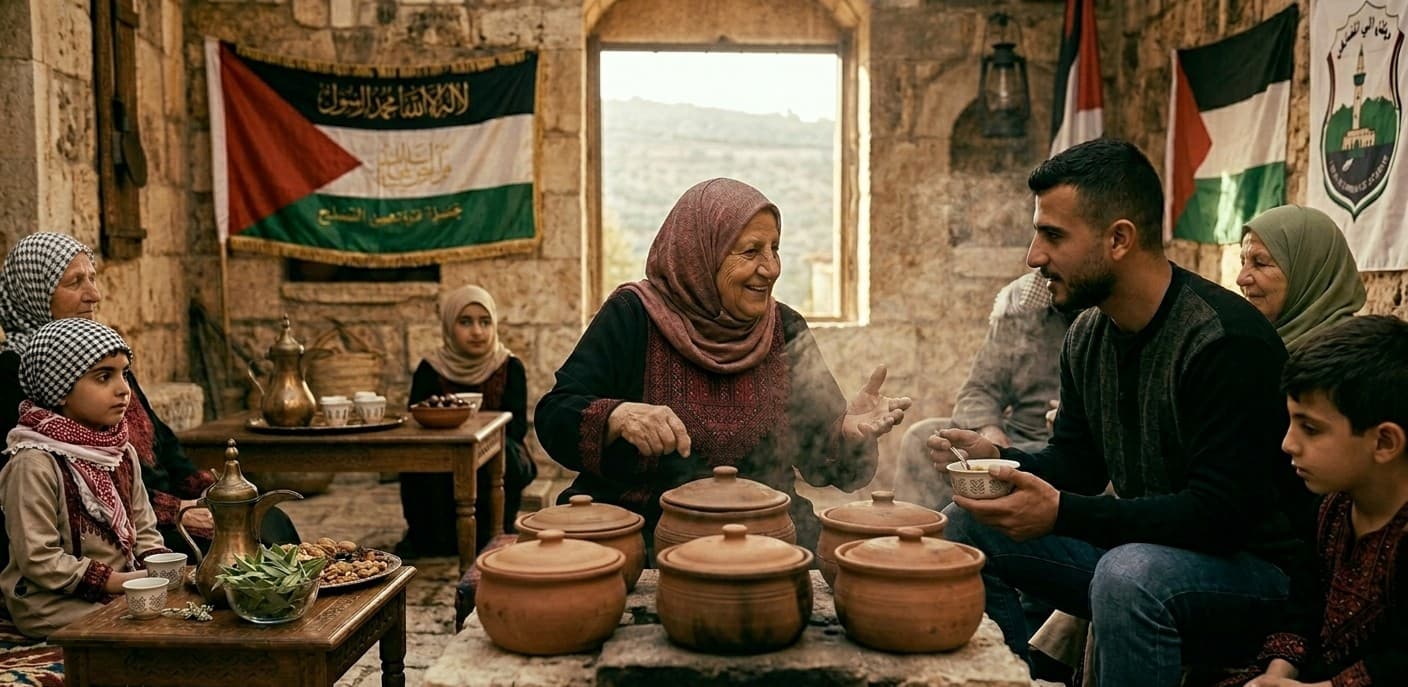
Grandmother Laila sat beneath an ancient carob tree, surrounded by her companions with their overflowing baskets. She called to her granddaughters: "Come, my children, learn that this land never goes hungry. Khubeizeh is our pride in times of hardship; it teaches a woman how to be the master of her home and kitchen without needing anyone." One of the granddaughters looked at the leaves and asked: "Grandma, why does everyone like to pick them together?" Laila replied, patting her head: "Because the blessing is in the gathering, my daughter. The morsel we forage together is what strengthens our resolve and keeps us close to one another and to our soil."
Rituals of the Season: From the Field to the "Qidreh"
- 1The Foraging (Al-Laqt): The careful selection of large, fresh leaves—a skill passed down from grandmothers to granddaughters.
- 2The Trimming (Al-Taqmee’): Cleaning the leaves by removing excess stems and preparing them for washing and chopping.
- 3Khubeizeh in Oil: Cooking the chopped leaves with plenty of onions and local olive oil, served traditionally with lemon and olives.
Social Significance: Kitchen Sovereignty
- Self-Sufficiency: Gathering Khubeizeh represents the Palestinian family's ability to sustain themselves from nature’s bounties.
- Intergenerational Connection: The journey of grandmothers and granddaughters together ensures the transmission of knowledge about the land and wild flora from one generation to the next.
- Food Sovereignty: Adhering to these traditional dishes is a form of cultural resistance, protecting the culinary identity from erasure.
Conclusion: The Lingering Fragrance of the Earth
As the sun set, the procession of women returned to their homes, their baskets laden with greenery and blessings. The granddaughters realized that Grandmother Laila’s stories about Khubeizeh were not just recipes, but roots reaching deep into the earth. When the scent of sautéed onions and oil wafted from the kitchens in the alleyways, everyone knew that spring had truly arrived through the blessed hands of the inheritors. As Grandmother Laila always repeated while sorting her leaves: "O Khubeizeh of the earth, the lady of the tables... in you is healing, and in you is returning goodness."