The Guardians of the Hives: Honey Harvesting and the Inherited Secrets of the Mountains
"In the mountains of Nablus, Hebron, and Galilee, the scent of wild mountain flowers blends with the majesty of ancient rituals, where honey harvesting is a trust passed from elders to the firstborn and a rare currency gifted in times of significance."
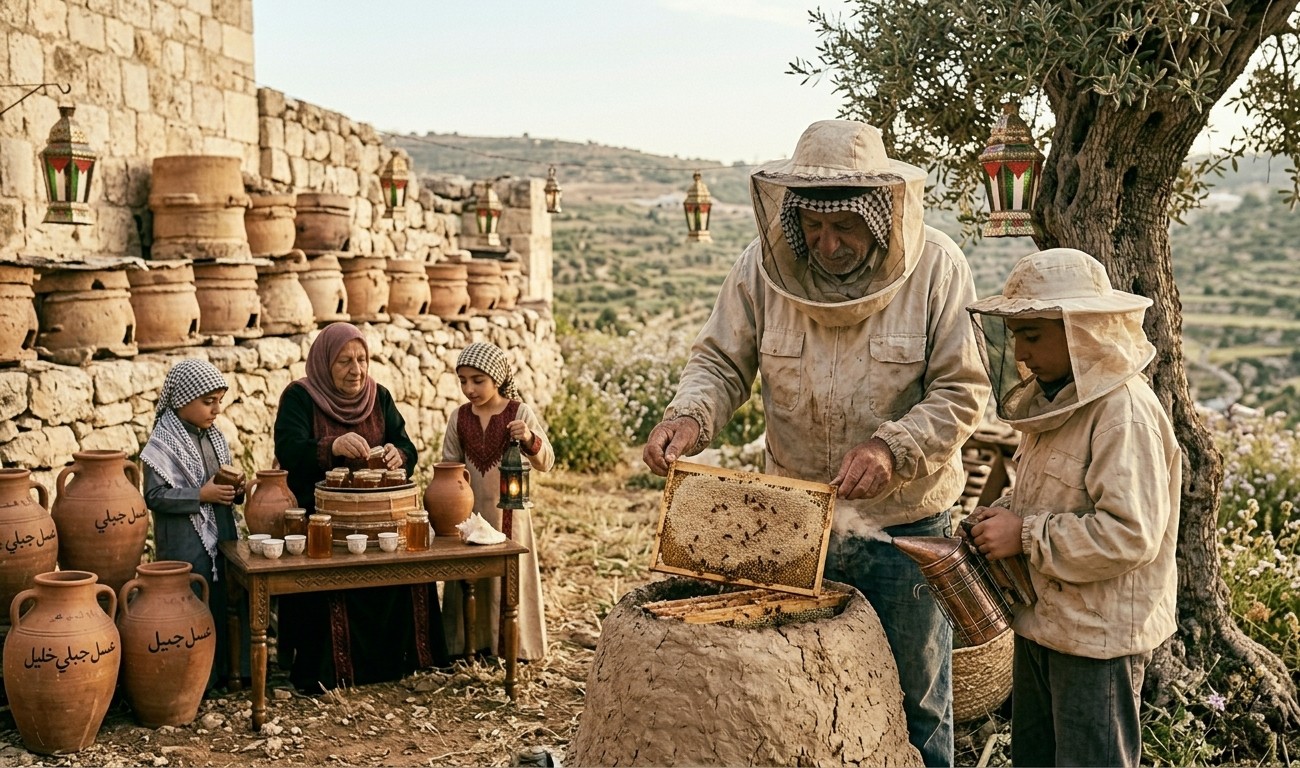
In the Presence of the Clay "Khawabi"
In the corners of ancient houses and along the walls of orchards, traditional Clay Hives stand like silent sentinels of the mountains. Everyone watches with reverence as the family patriarch prepares for the harvest; he dons his simple protective gear and approaches with a stillness that reveals a secret language between him and the bees. This scene is not merely about food production; it is the embodiment of sovereignty over the land’s bounties, yielded by the towering peaks of Nablus and the rugged slopes of Hebron. Clay Hives (Al-Khalaya al-Teeniyya): Traditional beehives handmade from clay and straw. They are renowned for their thermal insulation, providing a natural environment that mimics the rock crevices where mountain bees naturally dwell.
The Trade Secret: "The Trust of the Firstborn"
In Palestinian custom, honey harvesting is not open to everyone; it is a ritual shrouded in mystery and respect. It is overseen by the "Family Elder," who teaches the secrets of handling bees and the precise timing of the harvest only to his firstborn son. This succession ensures that the lineage and expertise remain within the household, making the bees an inseparable part of the family estate.
A Dialogue of Wisdom: "Honey is the Scale of the Home"
Grandmother Laila sat watching the filtration of the pure honey and said to her granddaughters: "My daughters, mountain honey in our land is not just for eating. This is liquid gold. In our time, it was the currency we bartered with, the gift that honored our faces in marriage alliances, and the medicine that no home could do without." She continued, pointing to the earthenware jars: "When you give someone a jar of Hebronite or Nabulsi honey, it is as if you have given them a piece of the mountain’s soul."
The Status of Honey: Food, Medicine, and Currency
- Food Sovereignty: Relying on mountain bees that forage on wild Thyme (Za'atar), Sage (Miramiyya), and Dittrichia (Tayyoun), which grants the honey unique medicinal properties and flavors.
- Currency and Exchange: Historically, honey was used in bartering due to its high value and enduring quality.
- The Healing Balm: Palestinian honey is considered the "Home Pharmacy," used to treat wounds, respiratory ailments, and to strengthen immunity during winter.
Conclusion: The Nectar of Belonging
As the harvest season concludes, the Khawabi (storejars) are filled with the nectar of the earth, gathered by bees from the peaks of Galilee to the valleys of Hebron. Everyone realized that preserving traditional beekeeping is an act of resilience against the falsification of nature, and that every drop of honey is a witness to the Palestinian farmer’s patience and his sacred relationship with his trees and mountains. As Grandmother Laila always repeated while tightly sealing the honey jar: "The honey of our mountains is a cure for the soul and the balance of the home; in it lies healing and pride, no matter how far you have roamed."