Al-Dahiyya and Ataba: Voices of the Mountains and the Roar of the Wilderness
"Powerful forms of Palestinian collective performance; blending the deep, melancholic poetry of Ataba with the fervor of Al-Dahiyya, which shakes the earth with synchronized stomps and unified breaths."
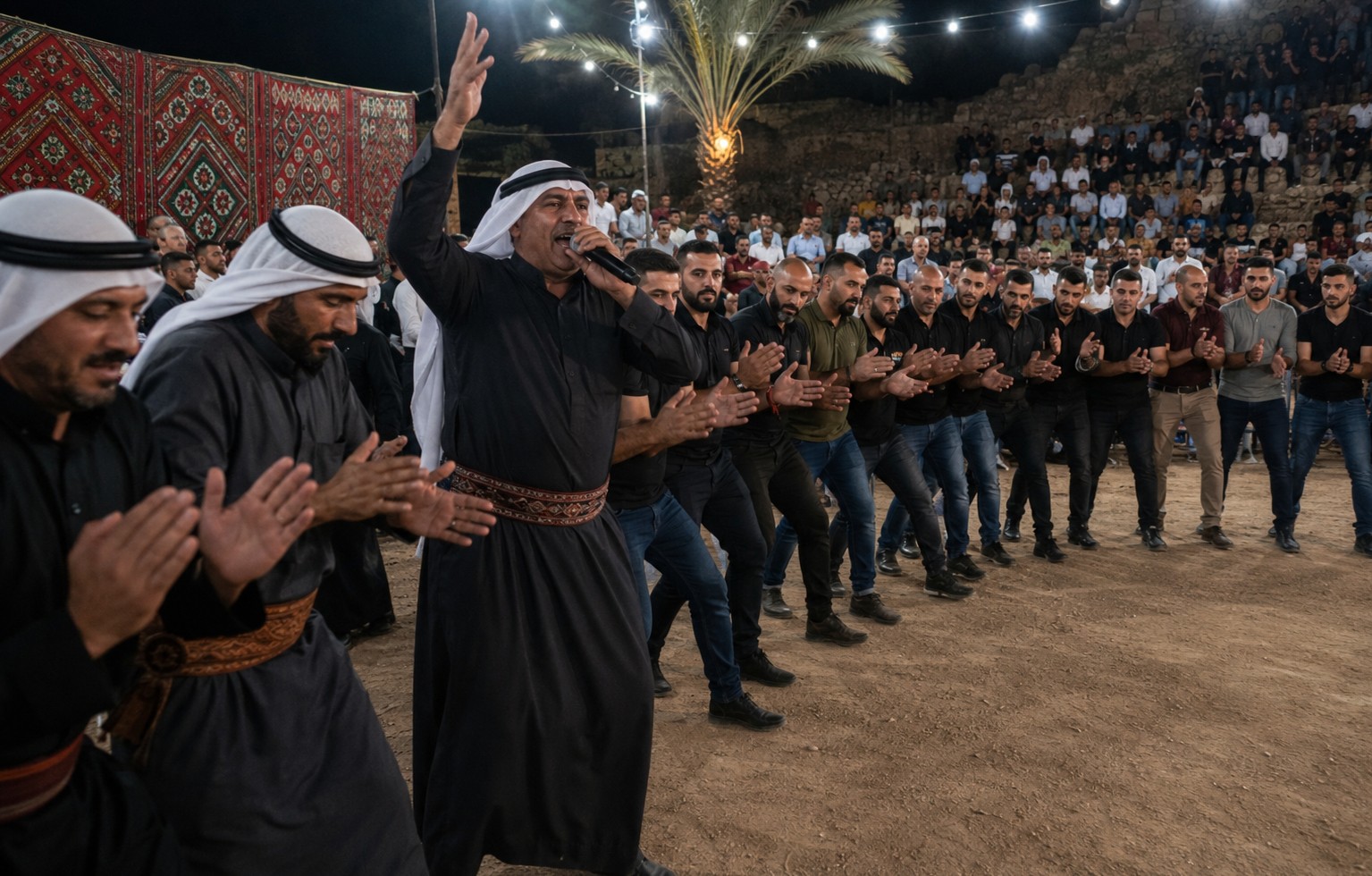
Al-Samir Beneath the Moonlight
In the expansive wedding courtyard, a light dust rises beneath the feet of men lined up in the Sahja, where participants gather in a majestic circle led by the Badda’. The night commences with an Ataba mawwal—a soulful melody erupting from a powerful throat that echoes through the mountains—before the silence is shattered by the roar of Al-Dahiyya, uniting everyone’s breath in a single rhythm that breaks the stillness of the night. *The Badda’: The folk poet who improvises the lyrics of Dahiyya or Ataba on the spot, leading the audience in response. *Al-Sahja: A rhythmic performance where men stand in a row or semi-circle, clapping and moving in unison to the beat of the poet’s verses.
Ataba: The Earth’s Lament and Time’s Reproach(Ataba is considered the backbone of Palestinian mawwals, relying on intricate wordplay and homonyms (Jinas):)
- Structure: An Ataba verse consists of four lines; the first three end with the same word but carry different meanings, while the fourth line concludes with a word ending in the letter "B" or the sound "Ba."
- Social Significance: Ataba is used to express longing, nostalgia for the land, and the reproach of time. It is an art form that showcases linguistic eloquence and the poet's ability to improvise.
- Al-Dahiyya: The Lion’s Roar and the Spir
Al-Dahiyya: The Lion’s Roar and the Spirit of the Desert(Al-Dahiyya migrated from the wilderness to become an inseparable part of weddings across all of Palestine, characterized by:)
- 1The Art of Ta’qeela: The collective movement where men lean slightly forward and strike the ground in synchronization while emitting the rhythmic, guttural "Dahhi" sound.
- 2The Message: Al-Dahiyya reflects chivalry, courage, and unity; the collective voice represents the strength of the family and its resilience against adversity.
A Dialogue of Wisdom: "A Single Voice Never Gets Lost"
Grandmother Laila stood watching the circle of men and said, addressing those present: "My son, Ataba is what heals the soul and releases the pain and longing held in the heart. As for Al-Dahiyya, it is our pride; it teaches men how to support one another with one voice and one step." She added: "When the Badda’ improvises, he writes our history in the air, and when the youth respond after him, they are signing a covenant as the guardians of this land."
Conclusion: A Rhythm That Transcends Barriers
Everyone realized that these songs are not merely melodies for entertainment, but a cultural weapon protecting the memory. Ataba preserves the names of lost villages and springs, while Al-Dahiyya instills the majesty of belonging in the hearts of the youth. With the final Dahiyya of the evening, those present were certain that a voice emerging from the depths of the earth with such sincerity could never be silenced by any siege. As Grandmother Laila always repeats, boasting of her people: "Oh, the soul-healing Ataba that speaks of our truth, and the Dahiyya that reveals the majesty of our mountains through our youth."