Palestine’s Green Gold
How the Olive Became the Memory, Labor, and Soul of Palestine
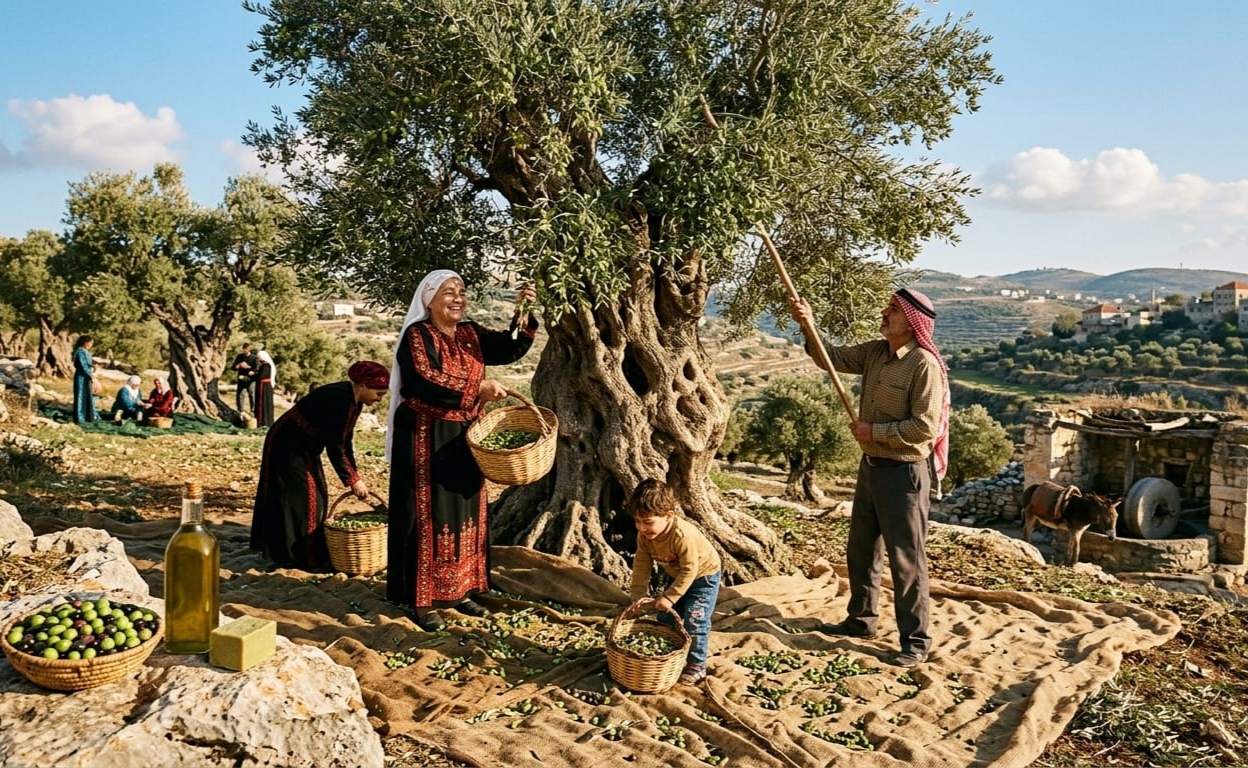
The Tree That Carries a Nation
The Story of the Olive Tree — From Canaanite Roots to a Living Symbol of Steadfastness If every nation possesses a symbol that distills its history into a single image, then Palestine’s symbol is carved into the trunk of an ancient olive tree whose roots reached deep into the earth long before borders and maps were ever drawn. The olive tree is not merely an agricultural crop in Palestine. It is the “green gold” that shaped Palestinian identity and formed the economic, cultural, and spiritual backbone of life across thousands of years.
Canaanite Roots: Where the Story Began
Historical and archaeological studies affirm that Palestine is among the earliest homelands of the Syrian olive tree. Since the Canaanite era, the first inhabitants of the land cultivated and domesticated this sacred tree, mastering the use of its fruit and oil. Among the oldest living witnesses to this history is the famed Al-Badawi olive tree in the village of Al-Walaja near Bethlehem, believed to be nearly 5,000 years old. Older than kingdoms and empires, this tree still bears fruit today — a living elder of the land and one of the oldest olive trees in the world.
The Olive Harvest: Palestine’s Great Rural Celebration
In Palestine, olive picking is never described simply as “work.” It is known as a mawsim — a season — and more deeply, a wedding-like celebration tied to the rhythms of the land. With the first dawn following the autumn rains of Tishreen, Palestinian families make their way toward the hills and plains carrying baskets, cloths, and generations of memory. • The Culture of Awnah (Collective Help): One of the harvest’s most cherished traditions is awnah — communal solidarity through shared labor. Neighbors and relatives gather to help one another complete the harvest, turning olive season into a living expression of social unity and mutual care. • Harvest Songs and Folk Chants: No olive harvest is complete without the mihaha — traditional chants and songs that strengthen the spirit of the farmers as they work beneath the trees. These melodies preserve an intimate relationship between the peasant and the land, carrying both affection and endurance in their verses.
Palestinian Olive Oil: From Ancient Lamps to Global Tables
Palestinian olive oil has long been celebrated for its exceptional purity and quality. • A Historic Economy: During the Ottoman era and long before it, Palestinian olive oil was exported through the ports of Jaffa and Acre to cities such as Marseille and London, where it was prized for the production of luxury soaps and fine goods. • Nablus Soap: The Scent of Green Gold The story of olive oil became inseparable from the city of Nablus, home to the historic soap factories that relied entirely on pure olive oil. Nabulsi soap eventually became one of Palestine’s most recognized exports, carrying the scent of the land to markets across the world.
Heritage Engineering: The Stone Presses
Palestinian villages remain rich with ancient olive presses carved into rock or built from stone, known locally as ma‘asir al-badd. These presses were far more than practical tools; they were feats of rural engineering that reflected how Palestinians developed sophisticated methods of production using stone mechanisms and animal power long before the arrival of modern machinery.
The Symbolism of Steadfastness: The Tree That Does Not Break
In modern times, the olive tree evolved from an economic symbol into one of profound national and political meaning. The olive tree came to embody the Palestinian people themselves — rooted, patient, and unyielding in the face of hardship. For this reason, olives and olive branches appear constantly in Palestinian poetry, especially in the works of Mahmoud Darwish and Samih al-Qasim, as well as in visual art and folk memory. The tree stands not only as a sign of livelihood, but as enduring testimony to belonging, continuity, and an ancient bond with the land.