The Foundation of Sun and Stone
A journey through the ancient cities, fortresses, and cultural legacy that shaped the earliest identity of the land of Palestine.
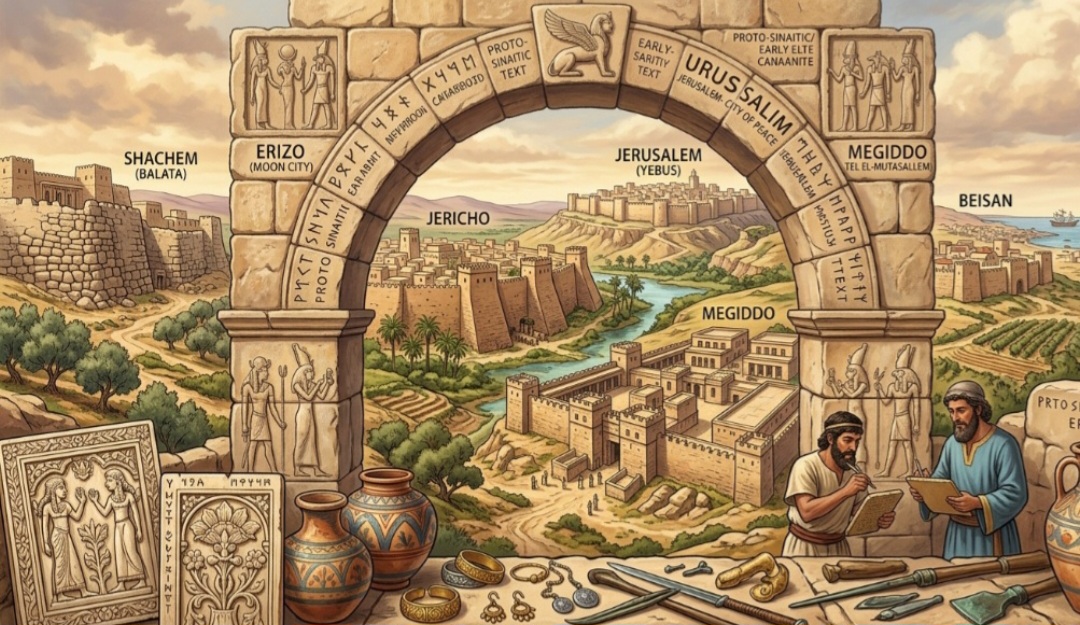
Canaanite Palestine: Foundations of Civilization and the First Walled Cities
The Canaanite civilization, which settled in Palestine during the third millennium BCE, stands as one of the earliest foundations of urban life and state formation in the region. The Canaanites left behind a remarkable civilizational legacy embodied in fortified cities, palaces, temples, and artistic craftsmanship that reflect the sophistication of their society and the depth of their cultural influence.
1. Major Historical Canaanite Cities
1- Jericho (Yeriho — The City of the Moon) Widely regarded as one of the oldest continuously inhabited cities in human history, Jericho revealed through archaeological excavations an advanced Canaanite defensive system, including massive stone walls and fortified gateways dating back to remote antiquity. 2-Jerusalem (Jebus) Founded by the Jebusites, a Canaanite people, Jerusalem was historically known as Ur Salem (“City of Peace”) and Jebus. The city was renowned for its formidable fortifications, whose walls withstood successive invasions for centuries. 3- Megiddo (Tell el-Mutesellim) Megiddo was among the most prominent Canaanite city-states in the Plain of Jezreel. It was distinguished by complex military fortifications, including monumental triple-entry gates flanked by guard chambers, in addition to grand palaces and temples constructed from enormous stone blocks. 4- Shechem (Balata — Nablus) Shechem became known for its massive sloping fortification wall, an outstanding example of Canaanite defensive architecture that relied on inclined construction techniques to reinforce the city’s defenses. Beisan (Beth Shean — House of the God Shan) 5- Beisan served as an important administrative and spiritual center. Archaeological discoveries uncovered Canaanite temples and material remains that testify to the deep roots of Canaanite settlement in the area. 6- Gaza (Azzah) Gaza emerged as one of the most significant Canaanite coastal cities, distinguished by its strategic position, commercial vitality, and strong defensive character.
2. Distinctive Features of Canaanite Architecture and Fortifications
Canaanite architecture displayed remarkable sophistication and innovation in the art of construction: • Sloping Defensive Walls: The use of enormous outward-slanting stone foundations strengthened city walls and made them more difficult to breach. • Advanced Gate Systems: City entrances were designed through successive fortified gateways protected by side guardrooms — an advanced military engineering technique for its time. • Palaces and Temples: Excavations uncovered vast Canaanite palaces containing finely carved ivory furnishings and decorative elements, reflecting the flourishing of craftsmanship and artistic expression.
3. Archaeological Discoveries and Artistic Heritage
The Canaanite legacy extended beyond monumental architecture to include refined artistic and material culture: • Pottery: Distinctive ceramic vessels with unique forms and decorative styles were discovered across archaeological sites such as Tell al-Ajjul and Tell Beit Mirsim. • Ivory Carvings: The Canaanites became renowned for intricate ivory craftsmanship. Exceptional pieces were uncovered in Megiddo and Ras Shamra, revealing extraordinary artistic skill. • Jewelry and Ornaments: Gold and silver jewelry was widespread during this era, serving both as personal adornment and as funerary offerings placed in burial sites.
4. Historical Markers of Canaanite Identity Urban Civilization
The Canaanites were among the first peoples to establish the concept of the fortified city as a political, economic, and social entity in Palestine. Language and Alphabet The Canaanites — particularly the Phoenicians among them — are credited with developing the alphabetic writing system that transformed communication and record-keeping across the ancient world.
Urban Planning
Modern excavations at sites such as Kafr Kana revealed remains of homes and fortifications indicating that the Canaanites possessed advanced knowledge of city planning and residential organization as early as the fourth millennium BCE. These landmarks are far more than silent stones buried beneath the earth; they are enduring historical testimonies to the identity of the land and to the people who laid the earliest foundations of civilization in Palestine.