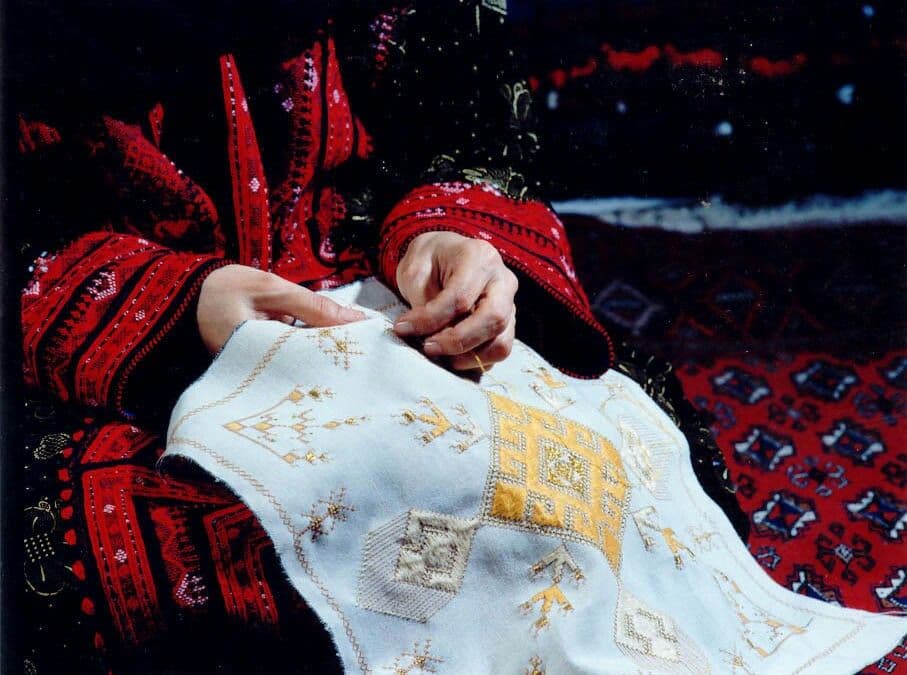
Articulation Points: The Land’s Fingerprint on the Human Voice
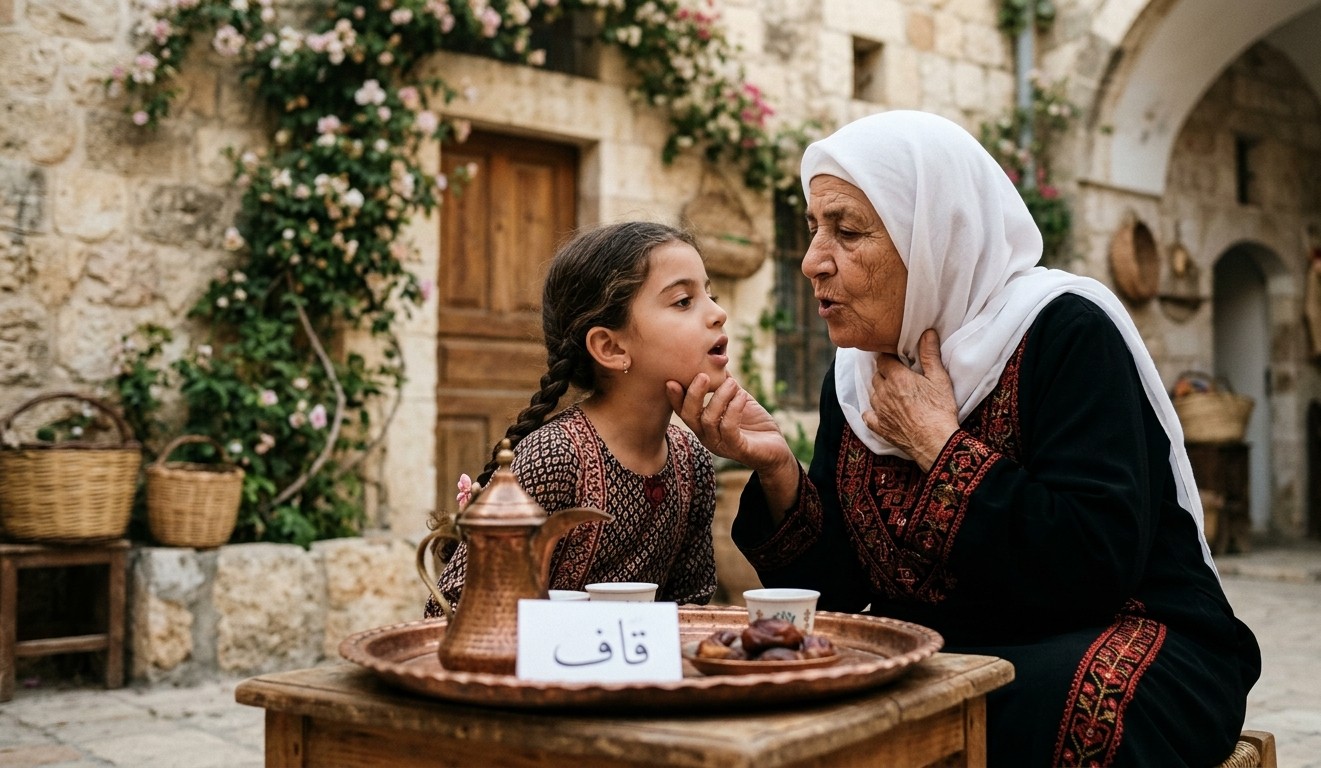
Articulation Points: A Journey Through the Palestinian Voice to Discover the "Land’s Fingerprint" "Grandmother Laila explains to her granddaughter how the letter Qaf defines geographical identity—tracing the vocal map from Jaffa to Hebron and Gaza."
The Tongue That Reads the Map
Grandmother Laila sat with her granddaughter, asking her to repeat specific words, monitoring the articulation of each letter with the precision of an expert. "My daughter," she said, "a letter is the 'vein' that connects you to your land. Every city in our country has its own melody, and every village has a 'fingerprint' on its tongue. The wise one can tell a person’s roots from the very first word."
The Game of "Qaf": The Riddle of Identity (The little girl asked, "Grandmother, why do some people pronounce the Qaf as an 'A', others as a 'K', and some as a strong 'G'?" The grandmother laughed and said, "That is the beauty of it, my dear! Listen:)
- 1The City Dwellers (like Jaffa and Jerusalem): They soften the letter into a glottal stop (the Hamza), saying 'Ahweh' instead of Qahweh (coffee). "Their tongue is soft, like the sea breeze and the stillness of the old alleyways."
- 2The Villagers and Rural Areas: They transform it into a heavy 'G' sound (as in 'Game'), saying 'Gahweh'. "Their voice carries the majesty of the mountains and the firmness of the rock."
The Hebron Pulse: "The Musical Tone"
Grandmother continued, pointing to her origins with pride: "As for the people of Hebron, their dialect is a 'music' of its own. They draw out their vowels with dignity; you feel the word emerging from the depths of the heart. They are known for a strong Qaf at times, and a unique melodic 'stretch' (the Matta) at the end of sentences that makes them recognizable anywhere in the world."
The Arts of Kashkasha and An’ana (She explained other ancient linguistic arts:)
- The Kashkasha: "Like when our folk in some villages turn the 'K' into a 'Sh' when speaking to a girl, saying 'Kif Halish?' (How are you?). This is an ancient eloquence that adds tenderness and affection to the speech."
- The An’ana: "The turning of the Hamza into an 'Ayn'. It is a dialect of ancient tribes still etched into the tongues of certain families, making you feel the letter has roots deep within the earth."
The Tongue That Never Strays
She taught her that this diversity is not a disagreement, but a "Mosaic": "When we speak our dialect, we are documenting our history. When you say 'Biddi' (I want) or use the terms of Gaza, you are preserving the 'fingerprint' of your ancestors who inhabited this place hundreds of years ago."
The Letter is the Homeland
The girl realized that her throat was not just an instrument for speech, but a vault for geographical memory. She looked at her grandmother and asked, "So, Grandmother, if I were lost anywhere in the world and spoke, would they know I am Palestinian from my letters?" The grandmother nodded with pride: "Yes, my daughter. Your dialect is the identity that will never disown you. Be proud of your letters, whether they are soft or heavy, for they are what tell the world: 'I am from here, and this is my land.'"