Ya Ammi, Where Is the Way?
An old folk game that children used to play in the neighborhood alleys in a spirit of fun and challenge.
Overview
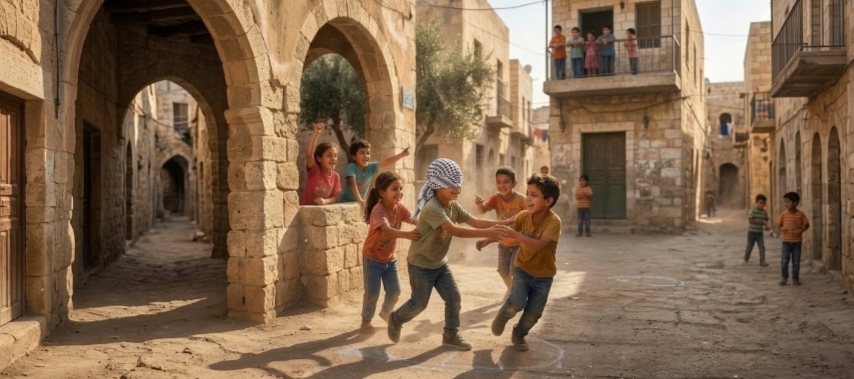
“Ya Ammi, Where Is the Way?” is one of the old folk games loved by children. It is a playful game similar to hide-and-seek and depends on movement and interaction between the players. Children used to play it during the day in a lively group atmosphere full of laughter and fun, where one player’s eyes were covered with a piece of cloth so they would try to identify or reach the others without seeing them.
How to Play
The game begins by choosing one child and covering their eyes with a piece of cloth so they cannot see those around them. After that, the other children move around nearby and go from one place to another, trying to attract attention through sound and movement. The blindfolded child depends on what they hear and the movement they sense around them to figure out where the other players are and tries to catch one of them. The game continues in an atmosphere of fun and interaction, as each player tries to stay out of reach of the child chasing them. When the blindfolded child succeeds in catching one of the children, the turn passes to the child who was caught, whose eyes are then covered, and a new round begins in the same way.
Skills Developed by the Game
- Observation and attention: following sounds and movements to discover the other players. Strategic thinking: choosing good hiding places or ways to reach the goal. Social communication: cooperating and interacting with the team or with the other players. Problem-solving ability: thinking quickly about how to find others or avoid being caught. Balancing risk and safety: making smart decisions while moving around the play area.
The Social Context of the Game
- 1It is usually played in squares and open spaces within the neighborhood. It encourages participation and interaction among children. It helps strengthen social bonds and build trust between them. It reflects an aspect of traditional folk culture. It depends on group play and direct communication among children.