Traditional Games
Palestinian Traditional Games
Folk activities that carried joy, competition, and community spirit across generations.
Overview
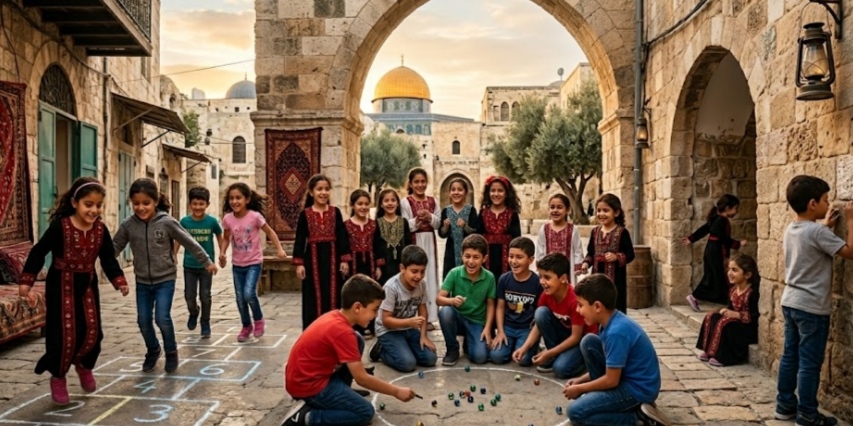
Palestinian traditional games were an essential part of daily life for children and youth in towns and villages. They were not only entertainment, but also a space to build friendships, strengthen cooperation and fair competition, and develop physical and mental skills.
Key characteristics
- Often played in open streets, courtyards, and fields.
- Require little to no special equipment.
- Rely on movement and physical activity.
- Encourage teamwork, challenge, and social bonding.
Common examples
- Hide-and-seek.
- Neighborhood running races.
- Seven stones.
- Tug of war.
- Street football (a simple ball game).
Values they promote
These games taught patience, rule-following, respect for others, and teamwork. They also helped improve fitness and encouraged healthy, honest competition.
How games were organized
- 1Choose a safe, open place to play.
- 2Agree on clear rules before starting.
- 3Split players into fair teams or clear turns.
- 4Play with energy, fun, and respect.
- 5End with good sportsmanship—enjoyment comes before winning.
Today
With the rise of digital entertainment, traditional games are less common. Yet they still appear in festivals, summer camps, and heritage events—keeping the spirit of simple joyful play alive.