O Stranger, Be Well-Mannered
A Palestinian Proverb About Respect, Humility, and Winning Hearts in Unfamiliar Places
A Guest Must Be a Person of Grace
This beloved Palestinian proverb is said to someone who finds themselves in a place that is not yet their own — among unfamiliar people, in a new environment, or within a community they are only beginning to know. Its meaning is simple yet deeply wise: As long as you are a guest or newcomer, carry yourself with respect, calmness, and good manners. Honor people’s customs, boundaries, and way of life before trying to impose your own presence. The proverb does not call for weakness or silence. Rather, it teaches emotional intelligence: that dignity and kindness open doors far more effectively than confrontation or pride.
When Is This Proverb Commonly Said?
1. To a Guest When someone visits another person’s home, they may hear: “When you are a stranger, be courteous.” It serves as a reminder to respect the household, avoid interfering in private matters, and behave with consideration and tact. 2. To a Traveler The saying is also directed toward those traveling abroad or living in unfamiliar places, encouraging them to respect local customs and laws in order to live peacefully and avoid unnecessary conflict. 3. In New Social or Professional Settings Whether entering a new workplace, gathering, or community, the proverb advises people to observe, listen, and understand the atmosphere before asserting strong opinions or trying to dominate the space. In Palestinian culture, wisdom often begins with knowing when to speak gently.
Story: Advice Beneath the Jasmine Arbor Before the First Visit
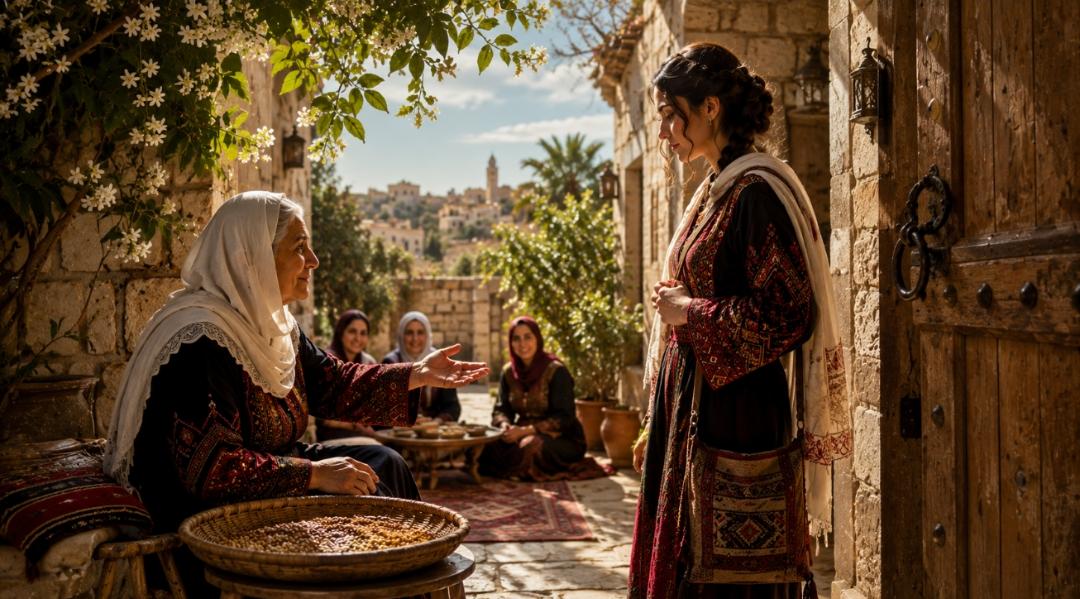
Grandmother Layla sat beneath the jasmine-covered arbor, sorting lentils in a large woven tray. Ruqayya entered the courtyard dressed carefully for her first visit to the home of her future in-laws. Though elegant and composed on the outside, nervousness showed clearly in her face and hurried movements. She spoke with determination: “Sitti, from the very beginning I’m going to tell them exactly what I like and what I dislike. I won’t stay quiet if anyone comments on my clothes or my personality. They need to know that I’m strong and that nobody controls me.” Grandmother Layla lowered her glasses and laughed softly with affection. “Come sit beside me, my dear,” she said. “And listen carefully to these words — wear them like earrings in your ears: ‘When you are a stranger, be courteous.’”
Strength Is Not Loudness
Ruqayya looked puzzled. “Why, Sitti? Does that mean I should act weak?” Grandmother Layla shook her head gently. “No, my love. Courtesy is not weakness. You are entering a new home among people who still do not truly know you — just as you do not yet know them.” Then she continued in her calm voice: “In the beginning, kindness and consideration open even closed hearts. They allow people to love and respect you before they rush to judge you.” She smiled and added: “The person who enters a home with gentle words becomes part of that home. But the one who enters with pride and confrontation loses peace before life there has even begun.”
The Tree That Bends with the Wind
Grandmother Layla took Ruqayya’s hand and continued: “My dear, be like the tree that bends with the wind so it does not break. Once its roots are deep in the earth, everyone will recognize its strength.” Then she tapped Ruqayya’s hand lightly and said: “Enter with a smile and a kind word… and watch how precious you become in their eyes.”
A Lesson Carried in the Heart
Ruqayya finally relaxed. She took a deep breath and smiled quietly. “You’re right, Sitti,” she said softly. “A kind word can break even stone.” And beneath the jasmine vines swaying gently in the afternoon breeze, another old Palestinian proverb found its place in a young heart preparing to step into a new chapter of life.