Palestinian Cities and Villages
Geographic and cultural diversity that reflects deep history and the spirit of place.
Overview
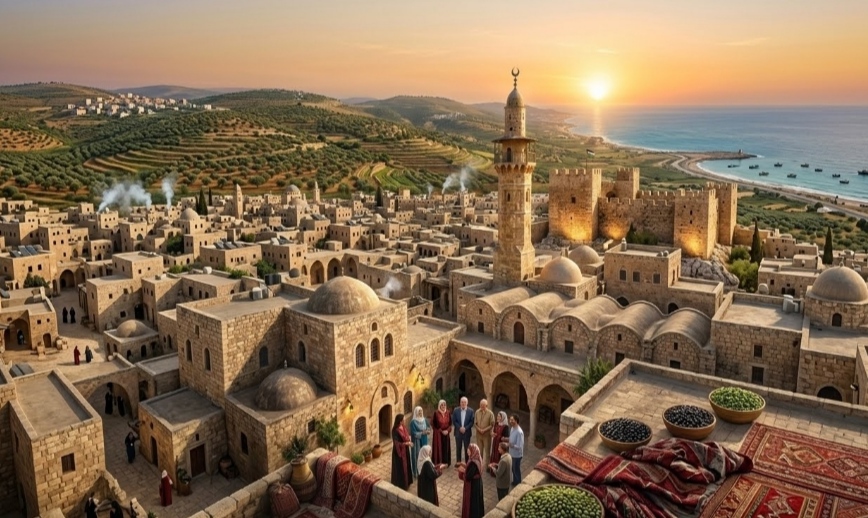
Palestinian cities and villages are known for their geographic and cultural diversity—stretching from coastal plains to mountains and valleys, and from small agricultural villages to historic cities. This diversity reflects a long history and successive civilizations that shaped architecture, customs, and ways of life.
Characteristics of Palestinian cities
- Active commercial, cultural, and educational centers.
- Old markets and historic quarters with traditional architecture.
- Religious and cultural diversity visible in landmarks and celebrations.
- Modern urban growth that blends heritage with development.
Characteristics of Palestinian villages
- Strong connection to land and agriculture—especially olives and wheat.
- Traditional stone houses and community courtyards.
- Tightly knit social relationships and a clear communal spirit.
- Stronger preservation of inherited customs and traditions.
Architecture and local character
Many towns and villages feature stone houses, arched roofs, and narrow alleys, especially in historic quarters. Architecture here is not only buildings—it is an expression of identity and collective memory.
What makes each city or village unique?
- 1A distinct location (mountain, coast, plain).
- 2A well-known agricultural or craft product.
- 3A prominent historical or religious landmark.
- 4Local dialect and distinctive social traditions.
Today
Despite challenges, Palestinian cities and villages continue to preserve their character while evolving socially and economically. Belonging to a city or village remains a core part of personal and social identity.