Nablus: The City Where Mountains Guard Memory
Between Mount Ebal and Mount Gerizim, History Ripens into Soap, Silk, and the Scent of Kanafeh
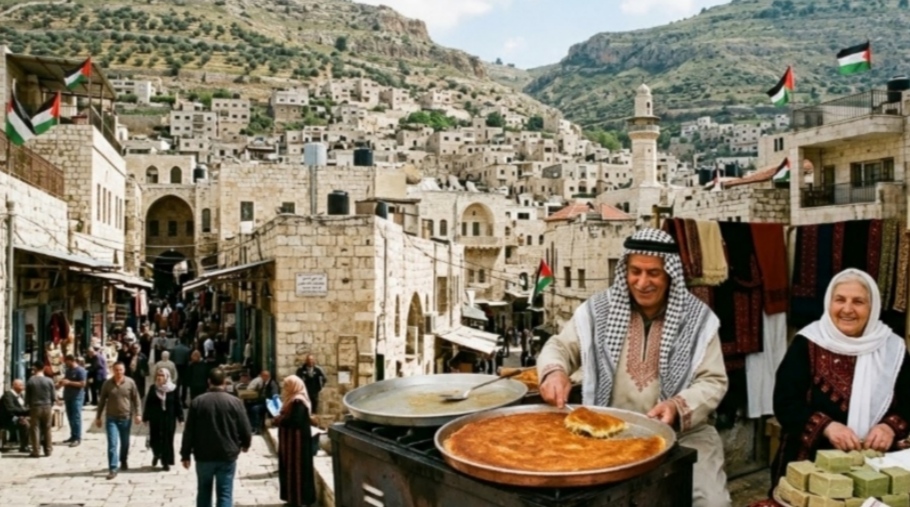
The Fragrance of Stone
Nablus rises proudly between the embracing slopes of Mount Ebal and Mount Gerizim — a city often called “Little Damascus” for its beauty, vitality, and deeply rooted urban heritage. Here, history has aged so gracefully that it seems woven into daily life itself: into the bread, the jasmine drifting through alleyways, and the rhythm of its ancient markets.
A City Cradled by Mountains
At the heart of northern Palestine, Nablus rests within a natural mountain fortress that grants the city both grandeur and protection. For centuries, it has stood as a gateway between the coast and the inland regions — a crossroads of trade, culture, and movement whose markets have never truly fallen silent.
The Old City — A Living Museum of Stone and Echoes
To walk through Nablus is to wander through an open-air chronicle of civilizations. • The Old City Its winding alleys, weathered arches, and seven historic quarters carry the scent of spices, olive oil, and centuries past. Every narrow passage feels suspended between memory and movement. • The Soap Factories of Nablus The city’s traditional soap houses stand like industrial fortresses of another age, preserving the story of Nablus and its enduring relationship with olive oil. Here, the famed Nabulsi soap is still crafted through methods passed down across generations. • Jacob’s Well Jacob's Well is a sacred and historic site whose roots stretch back thousands of years, bearing witness to the many civilizations and faiths that crossed this land. • Khan al-Tujjar Khan al-Tujjar — the ancient covered marketplace — transports visitors to the age of caravans and silk merchants, where colors, voices, and fragrances continue to breathe life into the old stone corridors.
The Nabulsi Table — Where Sweets Reign Supreme
The mere mention of Nablus awakens the memory of its unmistakable flavors. • Nabulsi Kanafeh Kanafeh is the city’s crowned queen — molten cheese beneath crisp golden pastry, soaked in fragrant syrup and traditionally baked over wood fire to preserve its unmistakable authenticity. • Mujaddara of Nablus A dish both humble and profound, prepared with lentils, rice, caramelized onions, and generous olive oil — embodying the simplicity and depth of Palestinian home cooking. • Madlouqa and Mutabbaq Traditional sweets that rival kanafeh in the hearts of those wandering through the city’s bustling markets.
The Nabulsi Dress — Elegance in Restraint
The traditional dress of Nablus reflects the city’s refinement and urban sophistication. • Grace Through Simplicity Unlike the heavily embroidered dresses of southern Palestine, the Nabulsi thobe is known for its restraint and dignity. Often crafted in white or black fabric, its beauty lies in elegant tailoring and subtle silk detailing rather than ornate decoration. • The Royal Shawl Women traditionally adorned their attire with a head covering known as the shal, lending an air of regal poise and quiet authority. • The “Mallas” Fabric Among the city’s most distinguished textiles was mallas — a luxurious silk fabric long associated with the women of Nablus and reflective of the city’s cultivated prosperity and cultural refinement.
The Spirit of Craftsmanship and Endurance
Nablus has long been a city of industry as much as heritage. From the production of pure olive-oil soap to the crafting of copperware, tahini, and olives, the city continues to embody the industrious spirit of Palestine. It remains a capital of craftsmanship and commerce — a mountain city whose soul has never yielded, where the fragrance of history lives side by side with an unshaken determination to endure.