Lifta: Where Stone Rises to Meet the Sky
A Mountain Village Suspended Between Memory, Silence, and Jerusalem’s Eternal Light
The stone's Long Memory
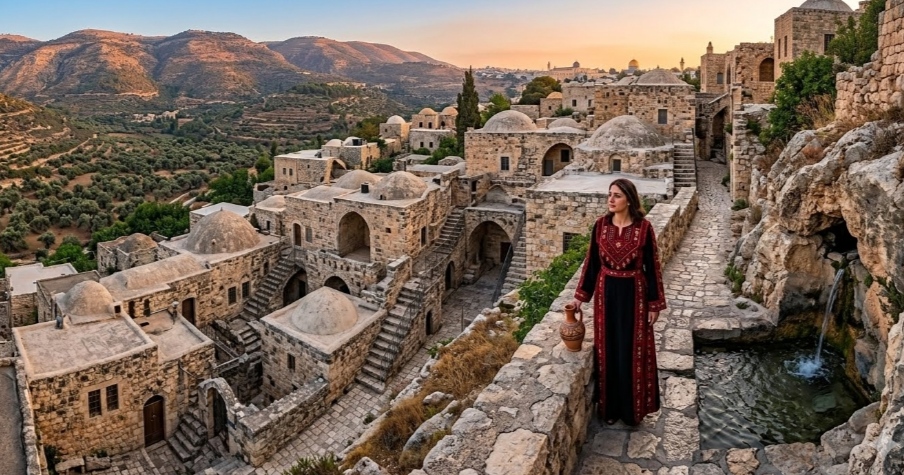
Lifta is not merely a village; it is a stone-written poem carved into the slopes of Jerusalem by the hands of Palestinian farmers. The moment you step into its pathways, time seems to pause in a rare moment of stillness, inviting you to contemplate a form of rural architecture unlike any other.
A Symphony of Arches and Living Stone
Lifta is renowned for its vaulted stone homes — known locally as al-‘uqud — grand houses crowned with sweeping domes and built from the very rocks of the surrounding mountains, as though the homes had emerged naturally from the earth rather than being imposed upon it. The visual harmony is breathtaking. Interwoven balconies, winding stone stairways, and terraced homes merge into an architectural fabric resembling a honeycomb suspended upon the hillsides, carrying both the majesty of fortresses and the serenity of countryside dwellings.
The Spring of Lifta — The Village’s Beating Heart
The spring of Lifta is far more than a source of water; it is the soul of the village itself. Its waters flow from a natural rocky cavern into two ancient stone basins that mirror the sky above and the distant silhouettes of Jerusalem’s minarets. Traditionally, the spring served as the village’s gathering place. Here, the sounds of mihaha — traditional Palestinian women’s chants — once rose alongside folk songs and the soft murmur of running water, creating a scene that felt almost cinematic in its natural beauty.
Wadi al-Shami — The Valley of Ancient Olives
From its elevated hills, Lifta overlooks Wadi al-Shami, a valley overflowing with greenery and home to olive trees so ancient that some are believed to date back thousands of years — the revered Roman olive trees. In autumn, the village transformed into a living hive of activity as families gathered for the olive harvest. The fragrance of freshly pressed olive oil drifted through the air from the old stone presses whose remains still stand today, bearing witness to the prosperity and rhythm of village life in earlier days.
The “Maltoush” Stone — Craftsmanship Carved by Hand
A closer look at Lifta’s walls reveals the beauty of hajar maltoush — finely hand-chiseled stone shaped with remarkable precision. This traditional method of stone carving reflects the mastery of Palestinian builders, who transformed ordinary walls into living works of art where light and shadow dance throughout the day.
The Lifta Dress — Silk, Majesty, and the Embroidery of Stars
Lifta’s beauty did not end at its stone houses and mountain paths; it lived also in the garments of its women. The traditional Lifta dress was crafted from luxurious satin and silk fabrics, glowing in regal shades of deep crimson and midnight black — colors that carried both elegance and quiet authority.
Embroidery That Spoke the Language of the Land
Its embroidery was adorned with delicate motifs known as ‘irq al-najmeh (“the vein of the star”) and ‘irq al-sarweh — refined patterns celebrated for their precision and grace. It was as though the women of Lifta gathered the beauty of olive groves, valleys, and mountain light, then rewove it in silk thread across the fabric of their dresses.
A Village That Refuses to Fade Where Abandonment Cannot Defeat Beauty
Lifta stands as living proof that beauty does not perish through absence. Its deserted homes seem to grow more luminous with every sunset, while its springs continue whispering Jerusalem’s songs of endurance and return.
The Bride Suspended Above Jerusalem
Lifta is not a ruin scattered across forgotten hills. It is a suspended bride resting upon the mountains of Jerusalem — waiting, with timeless grace, for the day her story is finally brought home.