Jenin: Where the Plains Breathe History
A northern Palestinian city where fertile earth, ancient faith, and enduring traditions meet beneath endless olive groves.
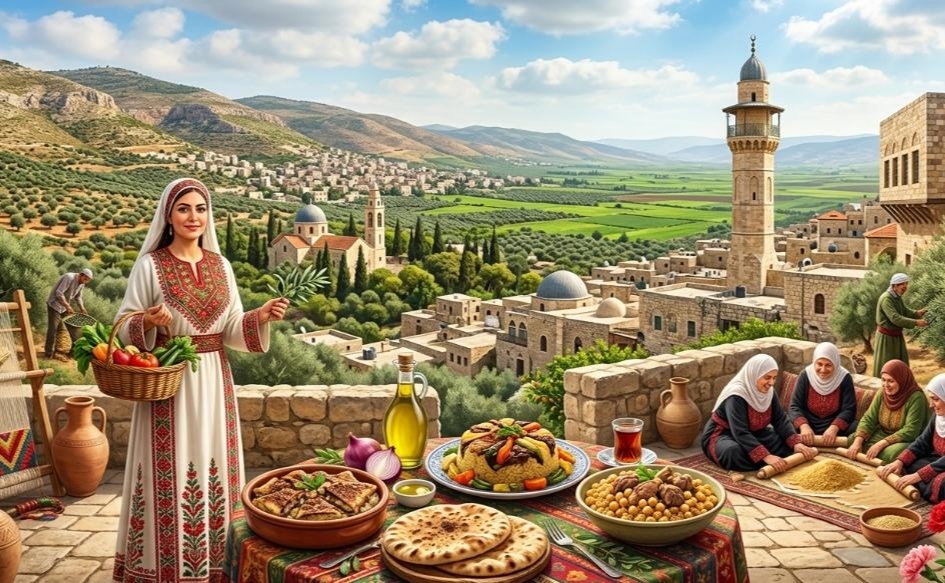
The Green Heart of Palestine
Resting gracefully along the vast plains of Marj Ibn Amer, Jenin rises like a green jewel where the richness of history meets the beauty of nature. It is a city that sheltered some of the world’s oldest churches and cultivated some of Palestine’s most fertile lands, earning its place as the country’s breadbasket and a lasting symbol of steadfastness and dignity. Between the scent of ancient olive groves rooted deep in the soil, the silhouette of towering minarets, and the quiet charm of its old architecture, Jenin tells a timeless story of belonging between people and land — a story woven with Palestinian generosity and the authenticity of living heritage.
Location and Landscape
Jenin lies at the northernmost edge of the West Bank, forming a natural link between the mountain cities and the Palestinian coast. The city overlooks Marj Ibn Amer, one of the most fertile agricultural plains in the region, which is why Jenin is widely known as “Palestine’s vegetable basket.”
Historical Landmarks and Archaeological Heritage
• Burqin Church Recognized as one of the oldest churches in the world — traditionally ranked as the fourth oldest — Burqin Church is closely associated with the biblical account of the healing of the ten lepers. • Fatima Khatun Mosque An enduring Ottoman landmark located in the heart of the city, distinguished by its soaring minaret and classical architectural design. • Bal‘ama Tunnel An ancient water tunnel dating back to early civilizations, once used to secure water access for the city during times of siege.
Traditional Cuisine
• Musakhan Jenin is celebrated for its use of locally pressed olive oil and taboon bread, making Musakhan the undisputed centerpiece of many family tables. • Maqluba This beloved layered rice dish is especially popular in the region due to the abundance of fresh vegetables harvested from Marj Ibn Amer. • Maftoul A cherished winter meal traditionally prepared by hand, often bringing the entire family together around the process of rolling and shaping the grains.
Crafts and Traditional Industries
• Olive Pressing Modern and traditional olive presses are spread throughout the villages of Jenin, where olive cultivation and olive oil production remain central to local life and economy. • Pottery Making Several nearby villages still preserve the craft of shaping clay and producing handmade earthenware. • Flower Cultivation Jenin was once widely known for growing and exporting flowers to many countries across the region.
The Traditional Jenin Thobe
The traditional dress of Jenin is admired for its quiet elegance and simplicity, commonly crafted from white or black fabric. It is adorned with hand embroidery known as ‘uruq, stitched in vivid shades of red and green. The patterns are inspired by the surrounding landscape, reflecting the forms of leaves, flowers, and the rhythm of nature itself.
Customs and Social Traditions
The people of Jenin are renowned for their hospitality and generosity. Their celebrations are marked by the lively rhythms of the northern dabkeh and traditional folk chants that express joy and deep attachment to the land. Olive harvest season in Jenin is far more than agricultural labor; it is a communal ritual where relatives and neighbors gather in the fields to pick olives, share meals, and preserve traditions passed down through generations. Jenin is a city where the grace of green landscapes meets the depth of history, and where the warmth and simplicity of its people leave an unforgettable impression on all who pass through it.