Hebron
It is one of the oldest Palestinian cities, renowned for its traditional crafts and its profound religious significance.
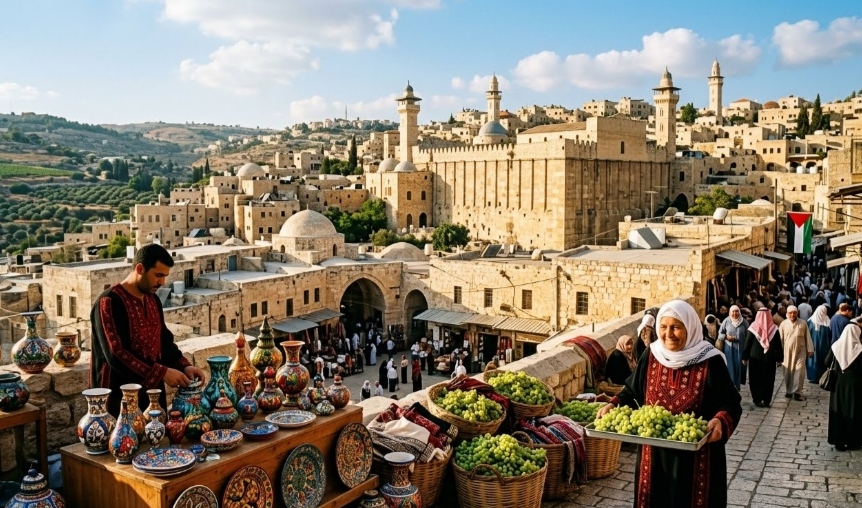
Overview
Hebron is a Palestinian city in the southern West Bank, often known as the City of Stone for its long-standing architectural heritage. Since ancient times, it has been an important center for craftsmanship and traditional industries. The city is also distinguished by a unique cultural legacy shaped by the presence of both Muslims and Christians throughout history.
Hebron’s Distinctive Traditional Dress
The Hebron thobe is one of the most celebrated garments in Palestinian traditional dress, known for its rich embroidery and finely detailed craftsmanship. Its primary color is deep crimson red, often accented with touches of black and green. Its embroidered motifs include repeating geometric patterns, wheat stalks, trees, flowers, and local symbols that reflect the land and agricultural life. It expresses the rural character surrounding Hebron, while showing a level of detail more elaborate than that of the dresses associated with coastal cities. It is typically made of cotton or wool, and sometimes velvet for special occasions. The dress is especially distinguished by its abundant ornamentation across the chest, sleeves, and lower hem.
Historical Landmarks of Hebron
Al-Ibrahimi Mosque (Sanctuary of Abraham) One of the most sacred religious sites in the city. It is traditionally believed to contain the tombs of the prophets, including Abraham (Ibrahim) and his wife Sarah. Hebron Old City A historic urban center featuring traditional markets, narrow stone alleys, and buildings dating back to the Mamluk and Ottoman periods, reflecting centuries of architectural and cultural heritage. Birkat Al-Sultan (The Sultan’s Pool) An ancient water reservoir that was historically used to collect and store water for the city, demonstrating the ingenuity of traditional water management systems. Hebron Rehabilitation Committee This local institution has played an important role in restoring many historic houses and markets in the Old City, helping preserve Hebron’s architectural character and cultural heritage.
The cultural heritage of Hebron is reflected in:
- Traditional Palestinian attire, especially the beautifully embroidered thobe.
- Historic markets, where handcrafted and heritage products are sold.
- Traditional weddings, which feature the vibrant dabke dance and folkloric songs.
Famous Dishes of Hebron
Musakhan One of the most beloved Palestinian dishes. It consists of taboon bread topped with chicken, caramelized onions, olive oil, and sumac. Mansaf A traditional dish commonly served during special occasions and gatherings. Qidra Khaliliya (Hebron Qidra) A signature dish of Hebron made of rice and tender meat, slow-cooked in a traditional copper pot inside a stone oven.
Famous Crafts of Hebron
Hand-Blown Glassmaking Hebron is renowned for its traditional glassmaking, where artisans shape colorful glass by hand using techniques passed down through generations. Pottery and Ceramics The city is also known for its handcrafted pottery and ceramic pieces, reflecting both practical use and artistic heritage. Leather Tanning and Shoemaking Traditional leather tanning and the crafting of handmade shoes have long been part of Hebron’s local craftsmanship and artisanal culture.